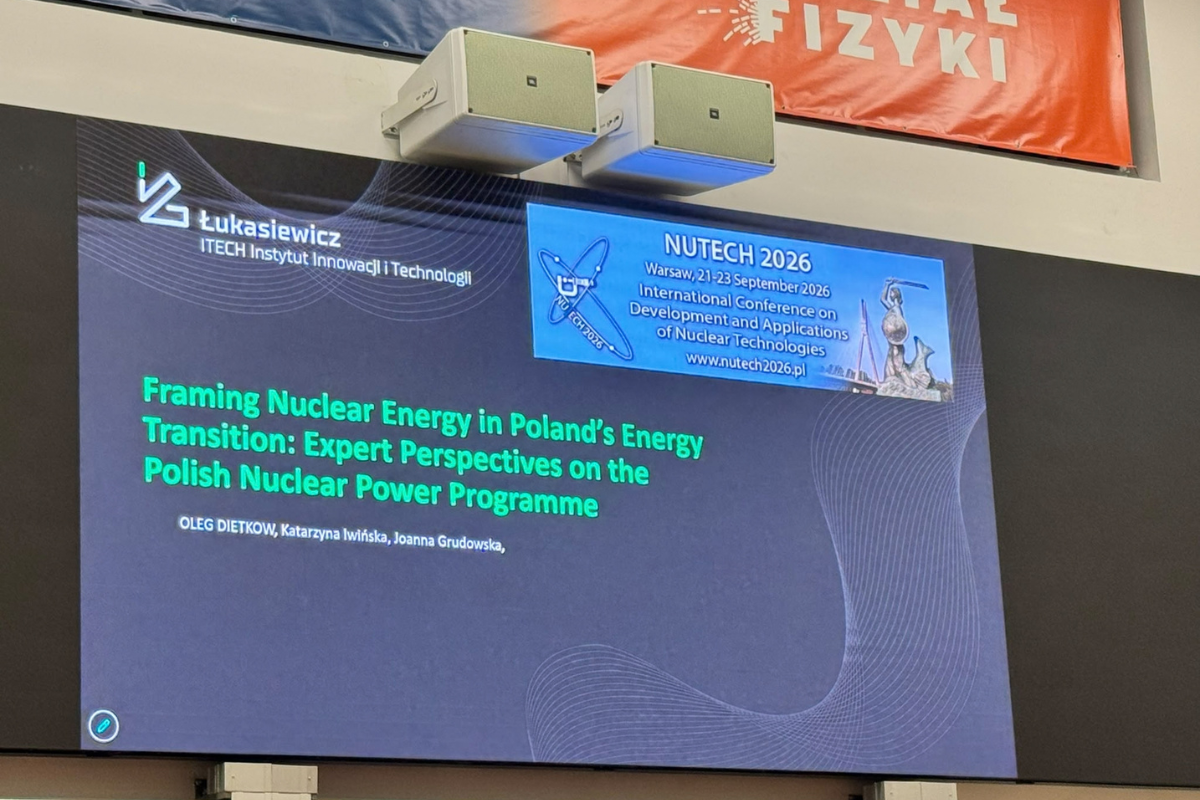
From 21 to 23 September 2026, the Faculty of Physics at the University of Warsaw hosted the international NUTECH 2026 – International Conference on Development and Applications of Nuclear Technologies.
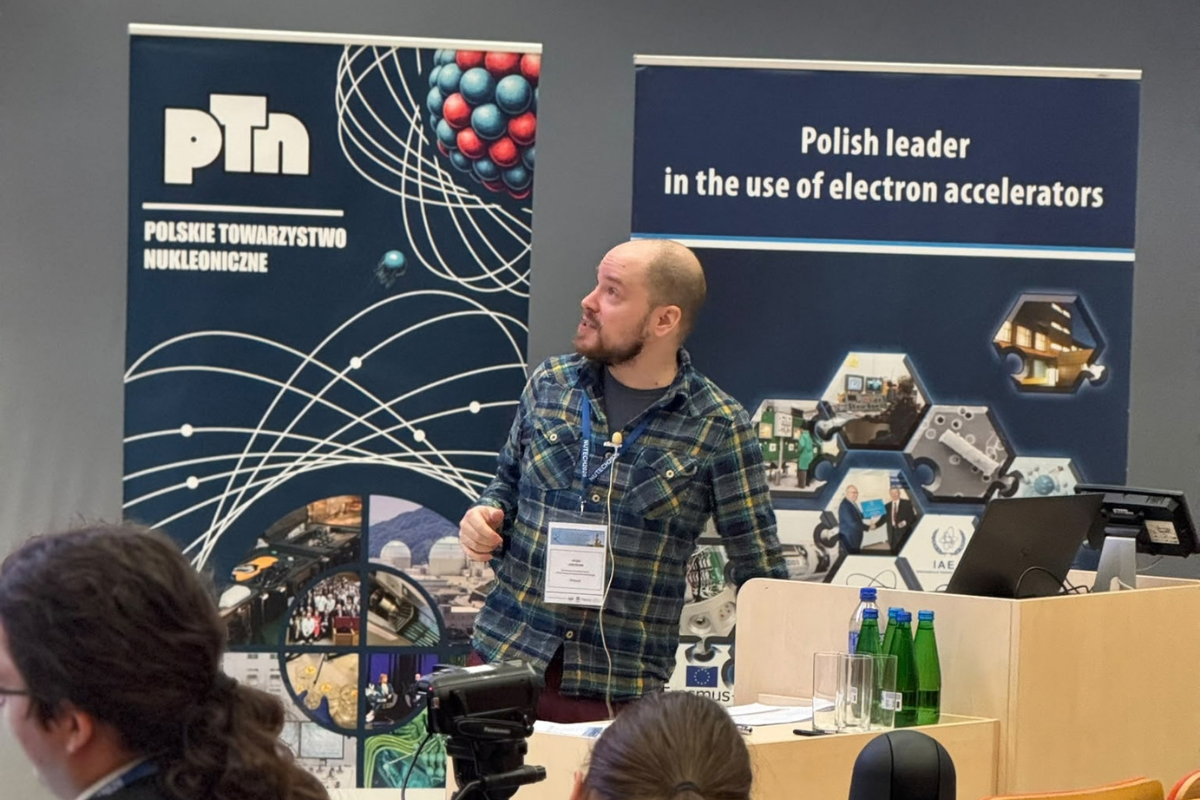
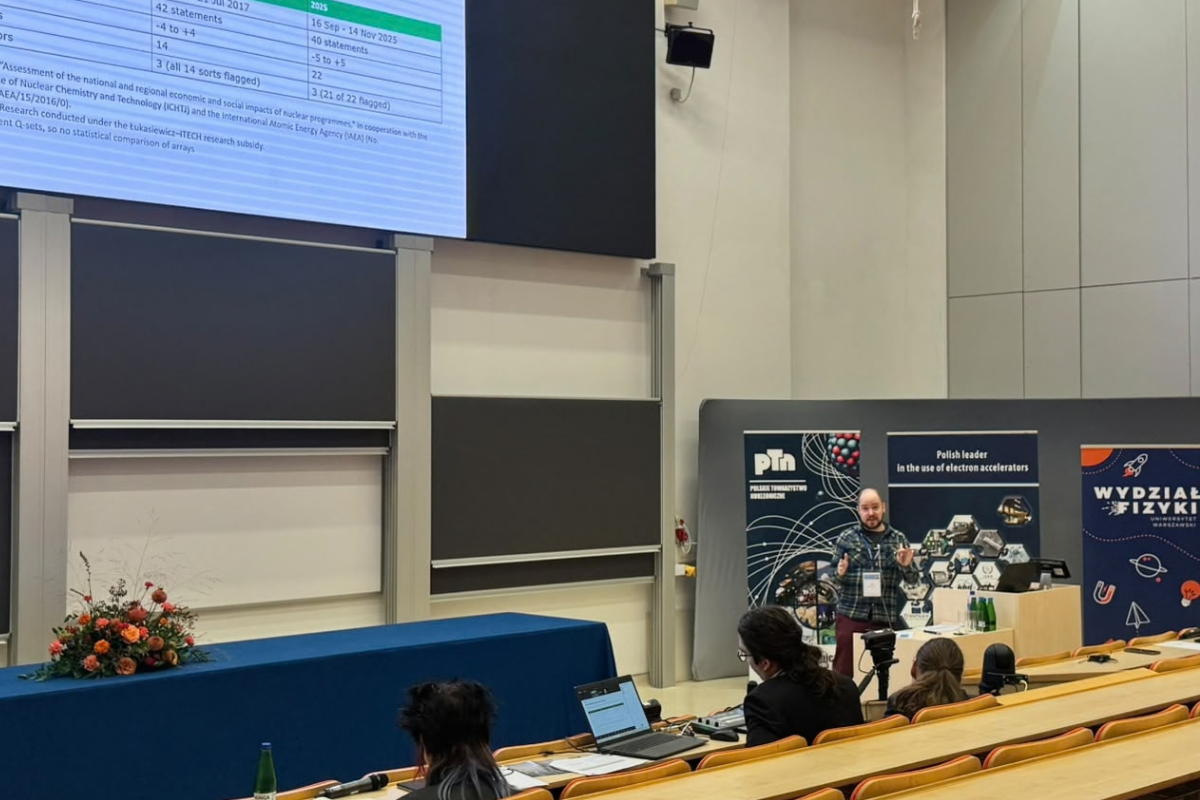
The event was attended by Oleg Dietkow, PhD, from the Energy Transition Research Center at Łukasiewicz – ITECH, who presented research findings on the implementation of the Polish Nuclear Power Programme.
NUTECH is a conference devoted to the development and practical applications of nuclear technologies. Its origins date back to symposia held in Poland from 1960 onwards, focusing on the use of nuclear techniques in industry, agriculture, medicine and environmental protection. Since 2008, the event has had an international character. This year’s edition brought together representatives of the academic community, research institutions and the energy sector. The programme covered, among other topics, the future of nuclear energy, its role in the energy transition, new reactor technologies, reactor safety, and the applications of nuclear technologies in medicine, industry and environmental protection.
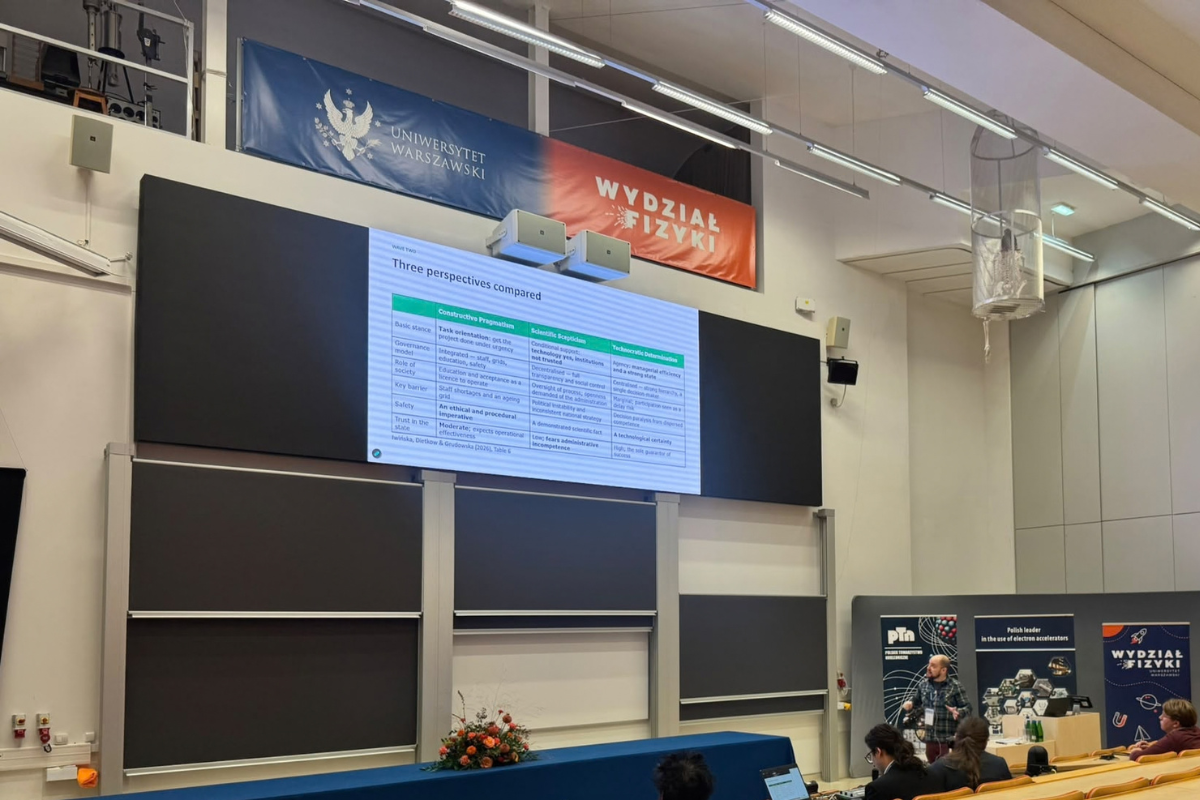
During the conference, Oleg Dietkow, PhD, delivered a presentation entitled “Framing Nuclear Energy in Poland’s Energy Transition: Expert Perspectives on the Polish Nuclear Power Programme”. The presentation outlined the findings of research on the implementation of the Polish Nuclear Power Programme, which are discussed in greater detail in the report “The Polish Nuclear Power Programme: Implementation Prospects in the Light of Expert Opinions”, prepared jointly with Katarzyna Iwińska, PhD, and Joanna Grudowska from Łukasiewicz – ITECH. Based on a study involving 22 experts representing 11 public institutions, the publication examines the key conditions shaping the development of nuclear energy in Poland – from institutional and regulatory issues, through skills development and security of supply, to risk management and the programme’s resilience in a changing geopolitical environment.