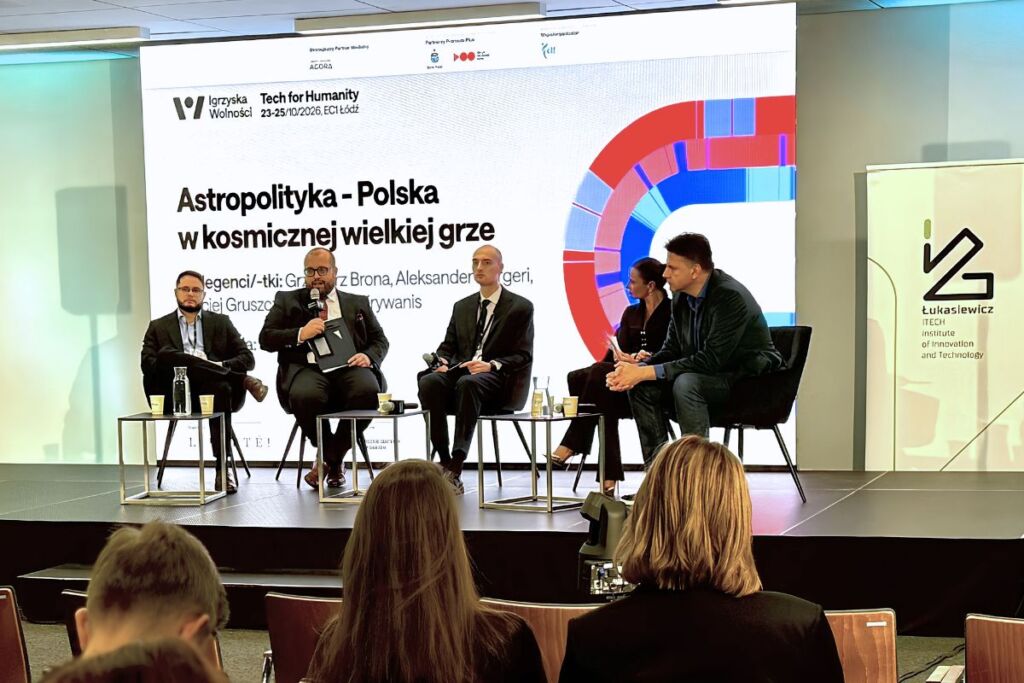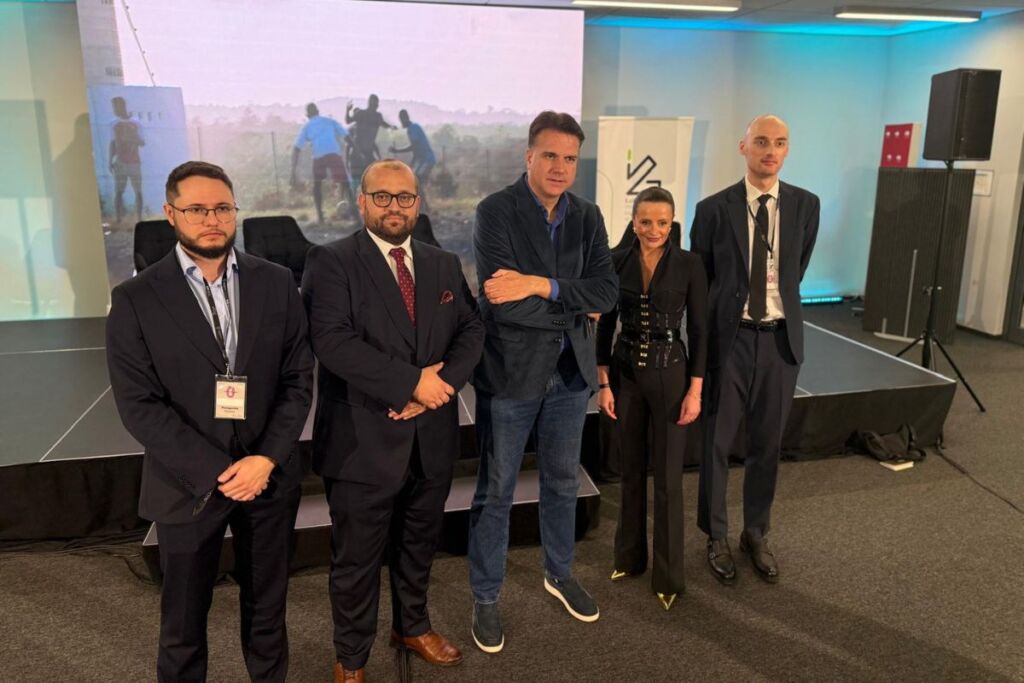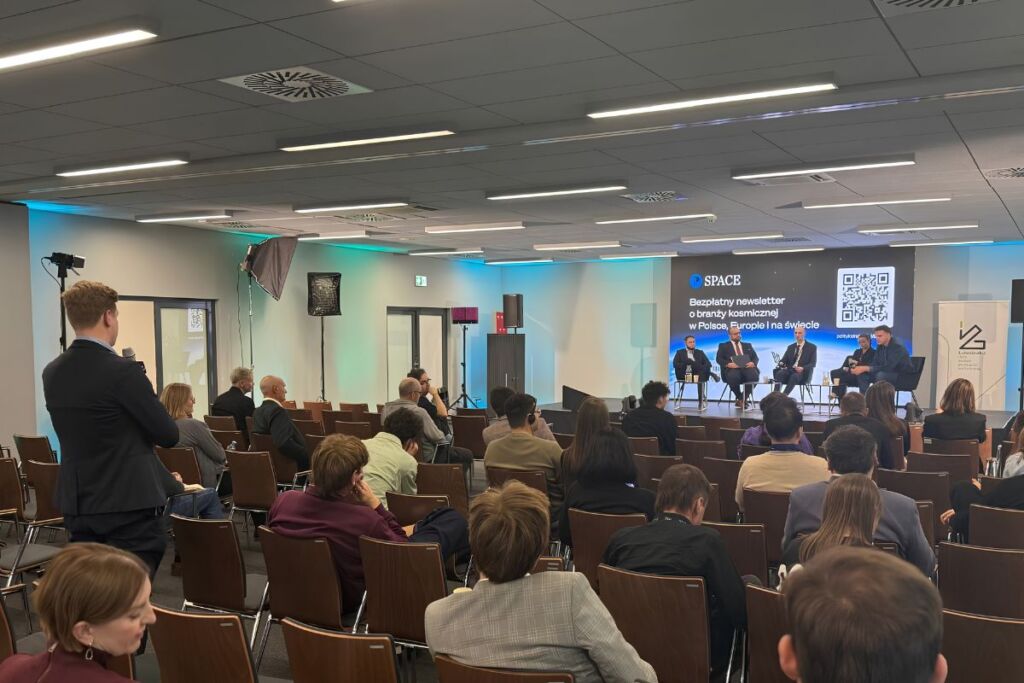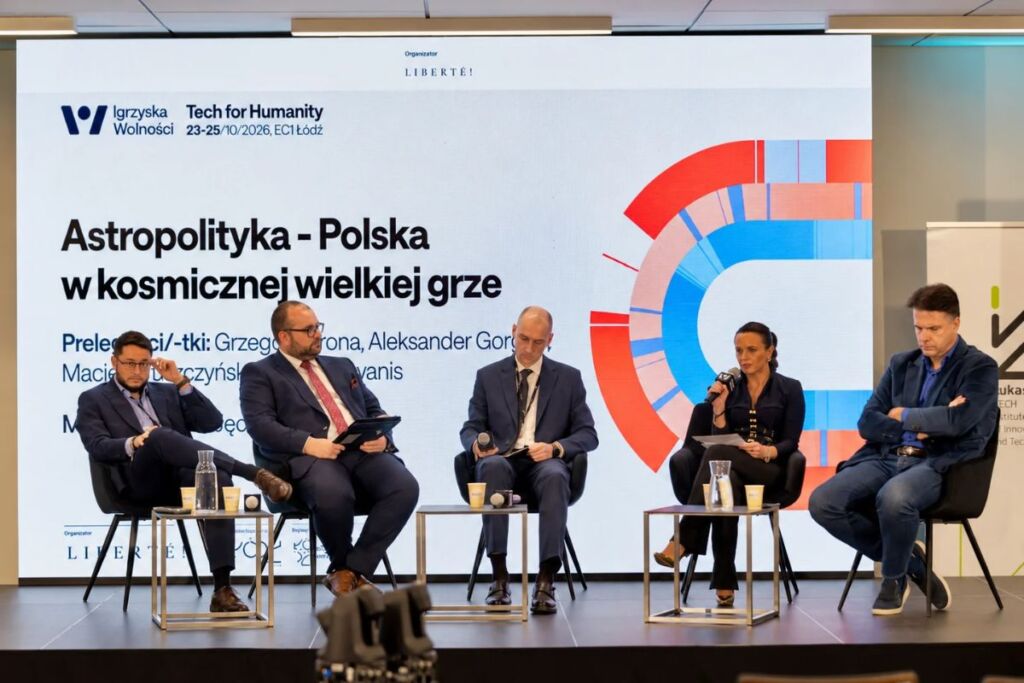
During yesterday’s panel discussion, “Astropolitics: Poland in the Great Space Power Game”, held as part of Freedom Games 2026, we explored the development of Poland’s space sector, its position within the international technology landscape, and the growing importance of space in geopolitical competition.
There is little doubt that international relations are increasingly extending into outer space, where countries are developing their technological capabilities, strengthening their strategic advantages, and seeking to counterbalance the capabilities of other major players. Although Europe is not yet in a position to compete directly with the United States and China, which lead the global space race, it is steadily building its capabilities, particularly through the European Space Agency (ESA).
Maciej Gruszczyński, PhD Sc. Eng. Head of the Security and Defence Innovation Centre (CBIO) at Łukasiewicz – ITECH, argued that Poland could turn its relatively recent entry into the space sector into a competitive advantage. Among the emerging threats, he highlighted the increasing frequency of rendezvous and proximity operations (RPO), which involve deliberately manoeuvring satellites into close proximity to one another. While these technologies also have civilian applications, they can be used for reconnaissance and intelligence-gathering purposes and, potentially, to disrupt or destroy an adversary’s satellite infrastructure.
Technologies designed to protect satellite systems and enhance their security could therefore become an area of Polish specialisation. He also emphasised the significance of Polish scientists and managers being appointed to senior positions within ESA. Gruszczyński encouraged participants to continue the discussion on the future direction of Poland’s space sector at the Horizon4Poland conference, scheduled to take place in Warsaw in early November.
Aleksander Gorgeri of the Łukasiewicz – Institute of Aviation outlined Poland’s capabilities in rocket propulsion, distinguishing between satellite propulsion systems, used to maintain orbital position and perform manoeuvres, and launch vehicle propulsion systems, which enable satellites to be placed into orbit. He emphasised that developing both types of propulsion presents opportunities for specialisation in areas that have so far been relatively underdeveloped in Europe, particularly green propulsion technologies that use less toxic propellants. Poland has made significant progress in this field, with numerous solutions being developed and prepared for deployment at the Łukasiewicz – Institute of Aviation.
The Institute continues to develop new propulsion technologies and components, including valves, while also pursuing the vertical integration of its supply chain. This is particularly important for reducing dependence on components sourced from outside the European Union and strengthening Europe’s technological autonomy. Similar challenges arise in satellite launch capabilities, where Europe remains heavily reliant on external service providers, particularly SpaceX. This dependence creates geopolitical risks and limits Europe’s ability to deploy observation and communications satellites rapidly and independently when an immediate response is required. Several European companies are working to develop indigenous launch capabilities, with the Łukasiewicz – Institute of Aviation supplying its own solutions in green propulsion technology to support these efforts.
According to Grzegorz Brona, DSc, co-founder and CEO of Creotech Instruments, Poland’s space industry, in its present form, began to take shape following the country’s accession to the European Space Agency (ESA) in 2012. Membership gave Polish organisations access to international projects, tenders and funding programmes, enabling them to gradually build technological expertise and expand their operations. As he pointed out, approximately 80% of orders in the space sector come from government institutions, making the industry particularly sensitive to political decisions and industrial policy priorities. In this context, he highlighted the ongoing delays in finalising Poland’s National Space Programme. Brona also reflected on the development of Creotech Instruments over nearly 15 years, from building expertise in relatively small satellite systems weighing up to 150 kilograms to pursuing ambitious plans in satellite communications technologies. He emphasised that the company employs approximately 500 specialists, including Polish professionals returning from abroad and talented young scientists from Western countries.
He noted that the industry has already seized the most readily accessible opportunities — the so-called low-hanging fruit. The next challenge is to develop more advanced technologies and establish the capacity for serial satellite production. Poland has once again reached a critical moment that it cannot afford to miss. Abandoning ambitions in specific technological fields could make it significantly more difficult to close the gap with global leaders and develop independent, sovereign capabilities in the years ahead.
Marta Krywanis of the European Border and Coast Guard Agency (Frontex) highlighted the importance of satellite data in one of the most politically sensitive areas of EU policy: the protection of the European Union’s external borders. As she emphasised, it is no longer enough simply to know what is happening at the border. Anticipating what might happen next is becoming equally important. To this end, Frontex is investing in the development of digital twin technologies, which go far beyond conventional models and visualisations. These are dynamic, continuously updated digital representations of physical environments and the processes taking place within them. Their operation on such a scale would not be possible without Earth observation technologies. At the same time, the growing emphasis on European technology suppliers is creating new opportunities for consortia and companies involving Polish partners. Frontex and ESA, which is planning to establish a centre in Warsaw, are already identifying potential areas for future cooperation.
During the discussion on actual manufacturing capabilities, Grzegorz Brona, DSc, emphasised that possessing the technology alone is not enough. Equally important is the capacity for large-scale production, supported by well-developed supply chains, manufacturing facilities and a sufficient degree of self-sufficiency.
The panellists also highlighted the importance of public support for the development of national space policy. People often rely on space-enabled technologies dozens of times a day, frequently without even realising it. These include weather forecasts, digital maps, navigation systems, television broadcasting and early warning systems for potential threats.
As Aleksander Gorgeri emphasised, raising public awareness is particularly important, as decisions on funding the space sector are, directly or indirectly, political decisions. This makes public debate, open discussion and the voices of citizens all the more important.
We are therefore particularly pleased to have contributed to discussions on the future of Poland’s space sector at Freedom Games, a festival of ideas that brought together more than 4,000 participants.
The event also marked the first in-person presentation of PI Space, a space-focused newsletter produced by Polityka Insight, with Łukasiewicz – ITECH and ICEYE serving as its content partners.
We invite you to subscribe!