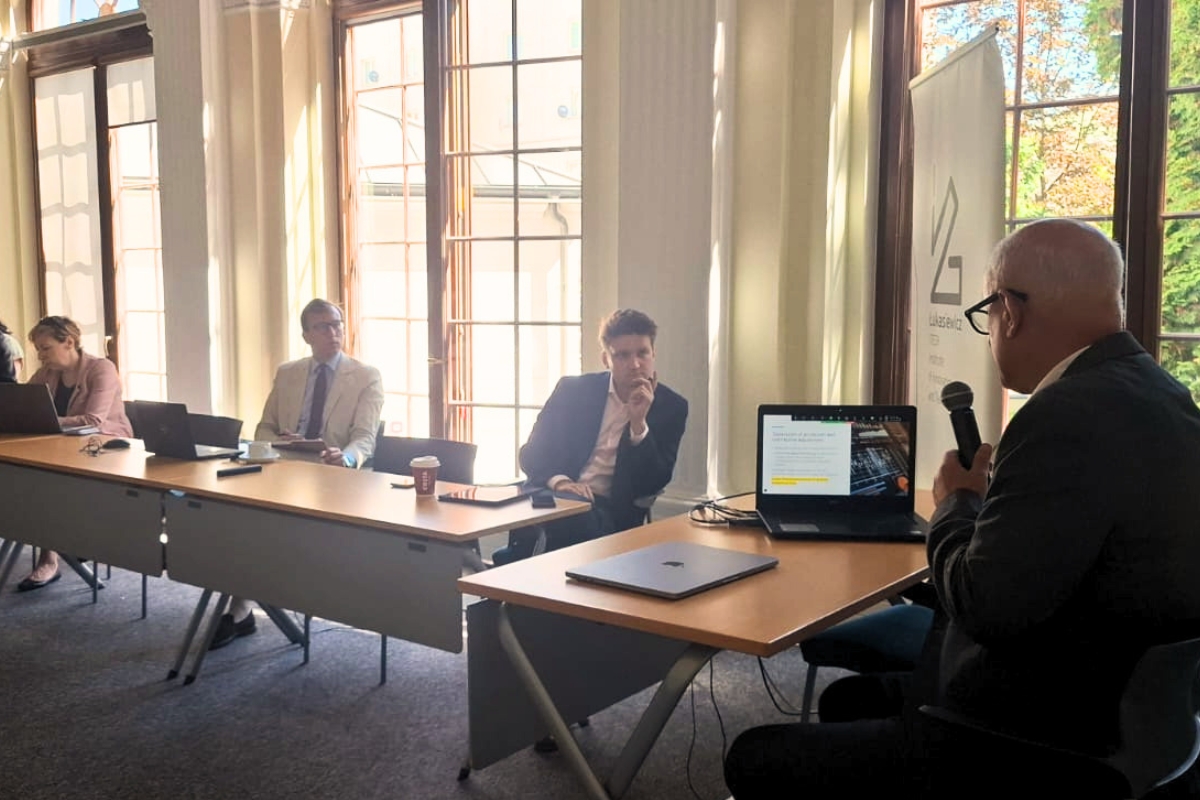
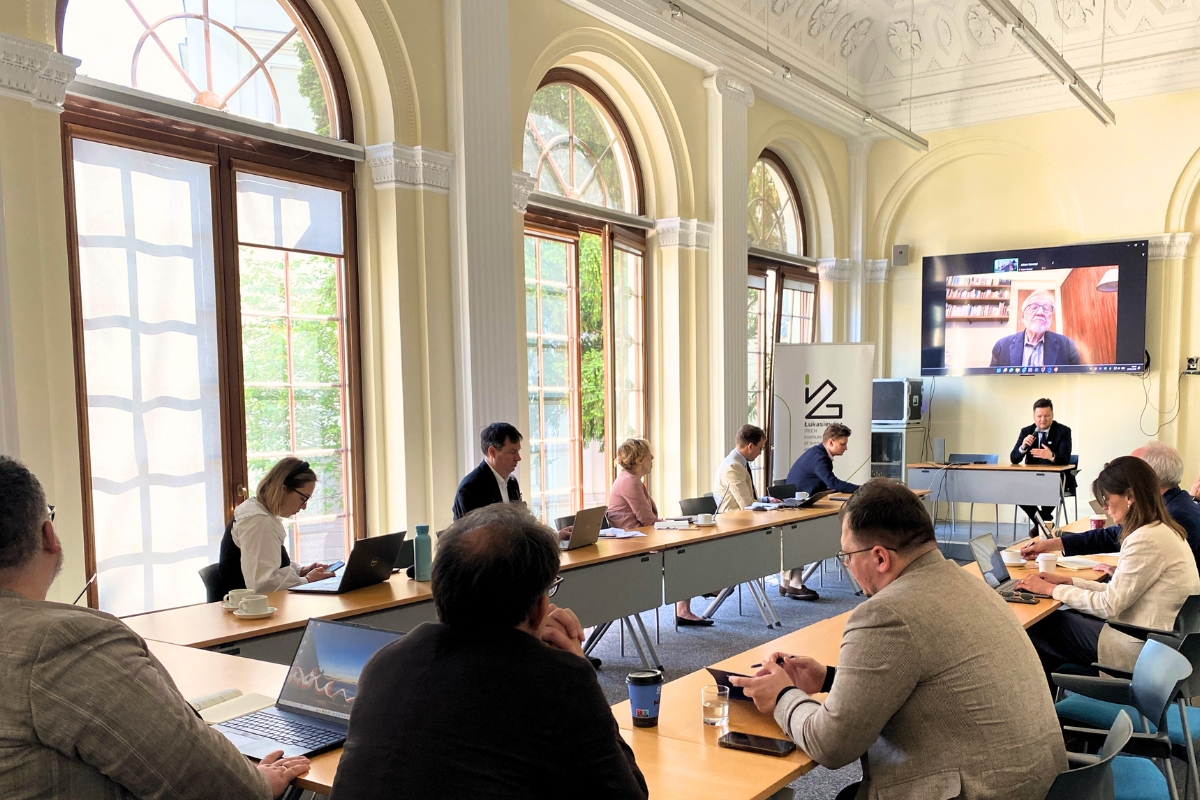
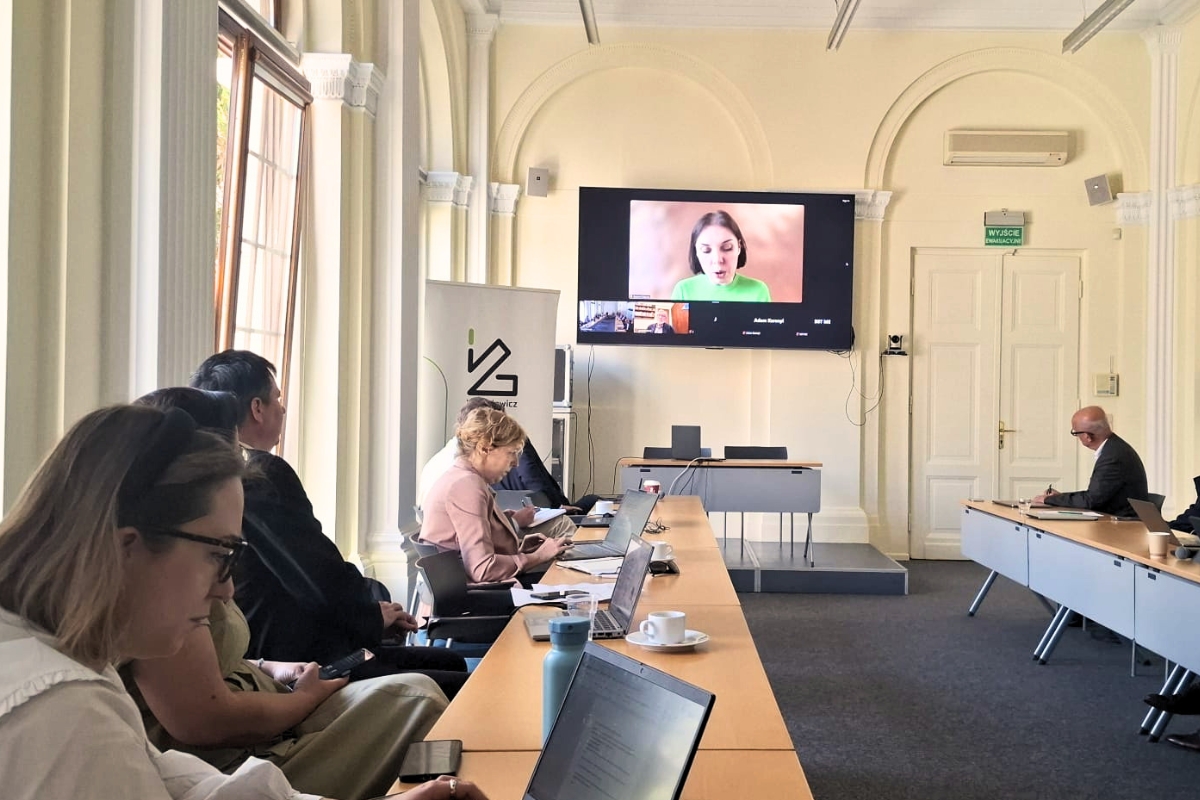
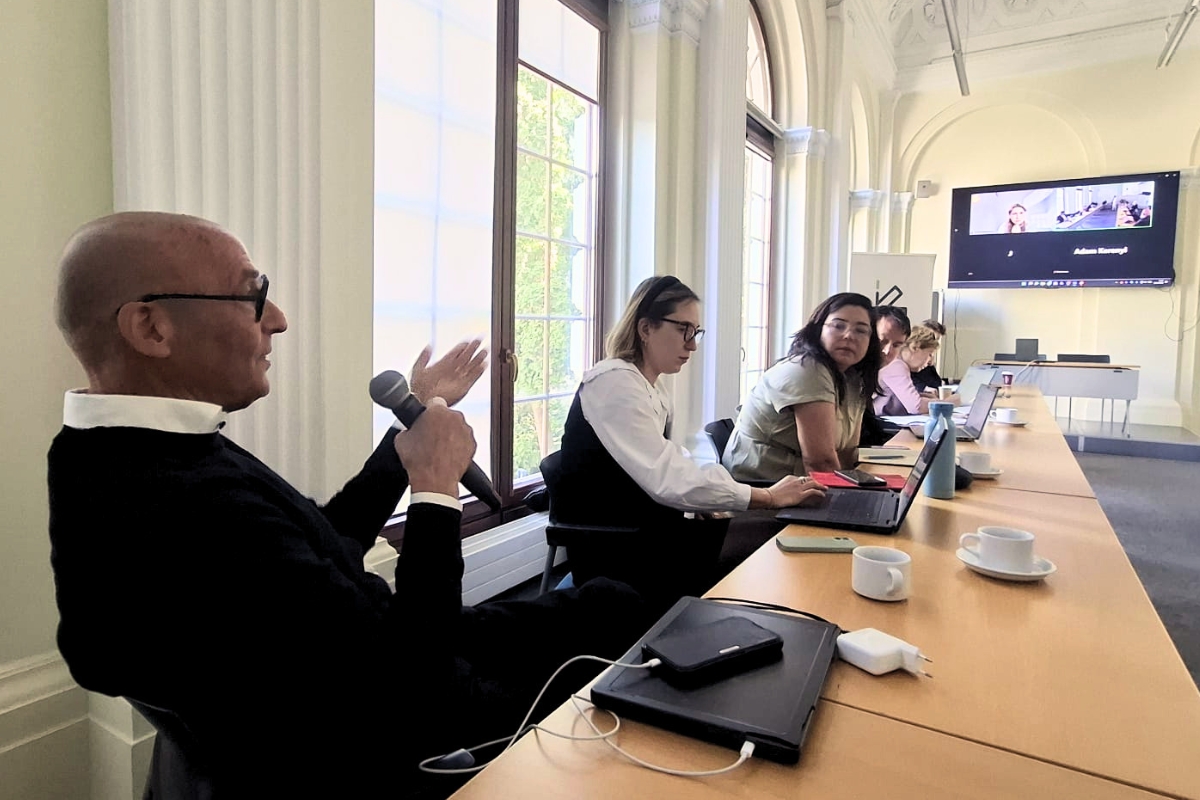
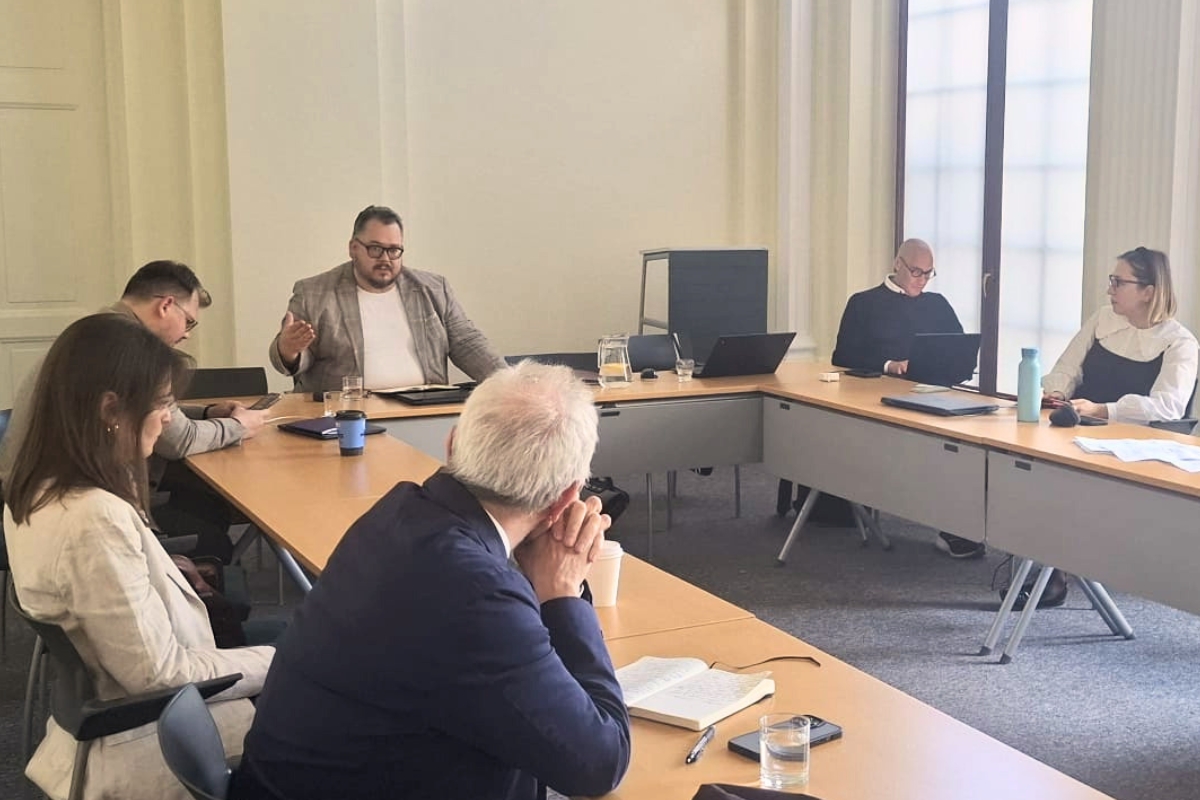
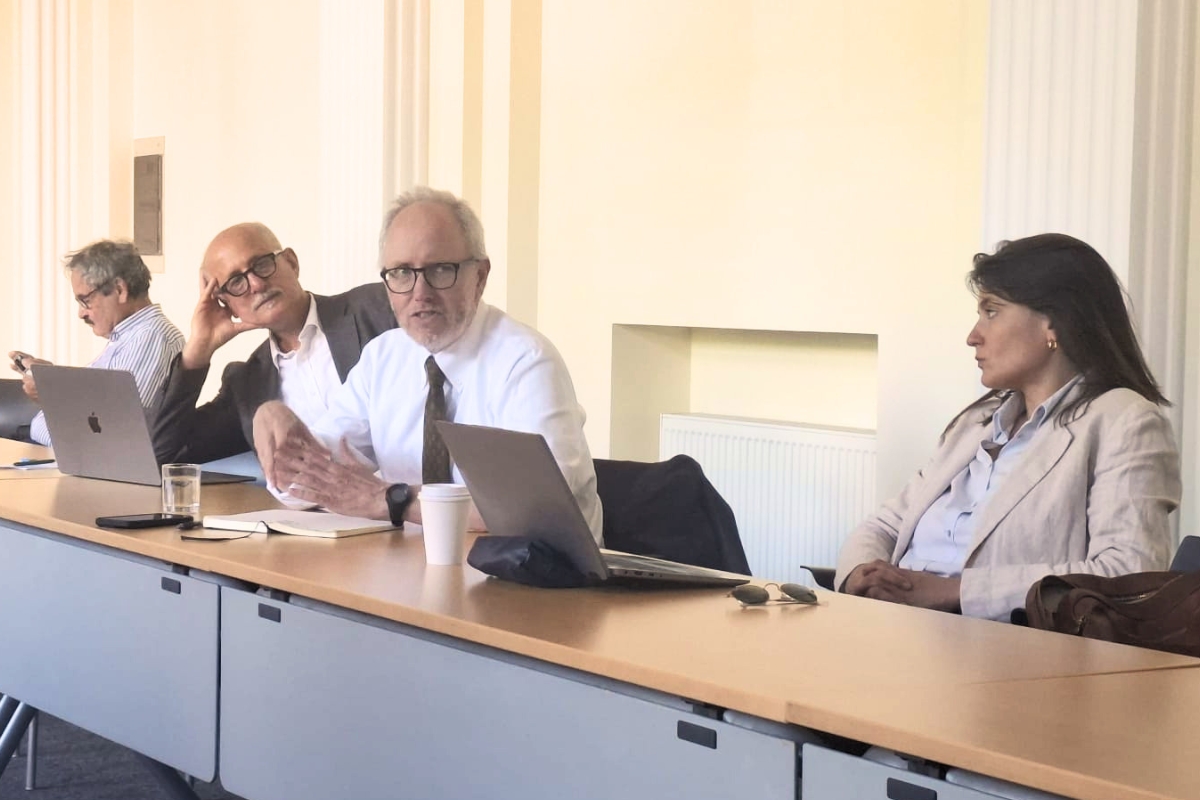
Today in Warsaw at the PAN building, decision-makers, experts and analysts from Ukraine and EU member states, including representatives of the Polish administration, EU institutions and key research centers from Brussels, Budapest, Florence, Kyiv and Warsaw met to tackle the question of how to make the accession process beneficial for both EU countries and Ukraine.
To date, the enlargement policy framework has not been designed with the accession scenario in the shadow of war in mind, so the dilemma is becoming increasingly clear: integration that is too slow threatens to erode the strategic importance of the Union and weaken Ukraine’s European anchorage, while integration that is too fast – without new safeguards – may trigger strong political tensions within member states. The workshop, co-organized by the Lukasiewicz – ITECH Research Network, was conceived as a space to look beyond this apparent alternative, in cooperation with Central European University, the European University Institute and key think tanks from the region.
The one-day meeting is a continuation of the Enlargement Hub project and serves to test the concept of new instruments for managing integration, including the idea of establishing a specialized agency linking Ukraine’s reconstruction to its gradual integration into the Union. We discuss how to combine the “merit-based” logic of accession with the realities of war economy, industrial policy and sectoral integration in areas such as agriculture or infrastructure, with contributions from Laszlo Bruszta of Central European University (CEU Enlargement Hub); Darya Marchak of the Ministry of Economy of Ukraine; Michal Kapy – Plenipotentiary of the Government of the Republic of Poland for the Economy of Ukraine. Ukraine Recovery Conference; Gerard Roland of the University of California, Berkeley, Veronica Anghel of the European University Institute; Melania Parzonka of the Polish Institute of International Affairs(PISM); Jerzy Plewa – former Director General of the Directorate of Agriculture of the European Commission, currently an expert of the Team Europe Direct network; Erik Jones – Director of the Robert Schuman Center for Advanced Studies at the European Institute for Gender Equality (EIGE). Robert Schuman at the European University Institute; Ivan Nagornyak – Policy Fellow at EPIK and Advisor to the Deputy Prime Minister for European and Euro-Atlantic Integration of Ukraine; György Raskó – former Secretary of State for Agriculture in Hungary; Oleksandra Avramenko – Chair of the Committee on European Integration at the Association of Ukrainian Agribusiness Club – UCAB; Andrew Schenkel from the Stockholm School of Economics; as well as other invited experts from Ukraine and EU member states.
The workshop opened with a conversation between Lukasiewicz – ITECH director Michal Matlak and Michal Kapa, director of the International Cooperation Office of the Polish Development Fund responsible for organizing the URC conference, about the event.
The workshop program includes three main blocks. The first is devoted to the overall challenges of managing the integration process under conditions of high uncertainty, and how to transform enlargement from a game of cost redistribution into a process of generating shared benefits for Ukraine and member states. The second panel looks at agriculture as an experimental area: participants analyze how to alleviate concerns about the opening of the agricultural market while extracting potential for regional cooperation and joint investment. The third block deals with the “geopolitics of time” – asking whether the standard, multi-year path to accession is at all adequate under conditions of war, and what a realistically accelerated yet credible membership trajectory might look like.
The workshop has a closed and working character, but its stakes go far beyond a single event. Conclusions and contentious issues worked out today at the Polish Academy of Sciences in Warsaw will be used to prepare the discussion at the Ukraine Recovery Conference in Gdansk and to further work on the institutional arrangements that may determine whether EU enlargement will be a success.