PUBLICATION
The Energy Transition Research Centre
Report: “The Polish Nuclear Energy Program: Prospects for Implementation in Light of Expert Opinions”
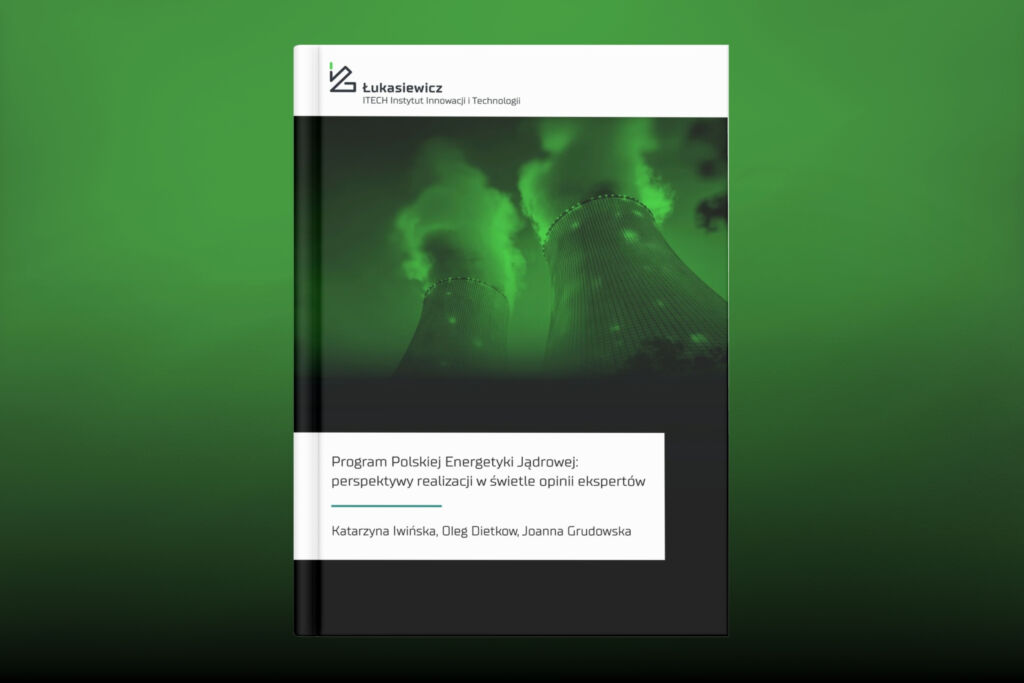
The report outlines what needs to happen for Poland’s nuclear energy program to be successfully implemented—from the governance model and competencies to security of supply and risk management.
The report “Polish Nuclear Energy Program: Prospects for Implementation in Light of Expert Opinions” was prepared by a research team consisting of Dr. Katarzyna Iwińska, Dr. Oleg Dietkow, and Joanna Grudowska as part of the work of the Łukasiewicz–ITECH Center for Energy Transition Research.
The publication, released on May 11, 2026, is based on a study conducted using the Q methodology among 22 experts representing 11 public institutions. The analysis identified three dominant perspectives on the implementation of the Polish Nuclear Energy Program (PPEJ): Constructive Pragmatism, Scientific Skepticism, and Technocratic Determination.
The study’s findings indicate that, despite a broad consensus on the need to develop the nuclear energy sector in Poland, the key challenges center on the timeline for implementing projects, the availability of expertise, the management model, and non-technical risks.
The report’s conclusions emphasize the need to treat the PPEJ as a multi-decade national program, based on a stable institutional framework, predictable strategic decisions, and an integrated management model. Developing a long-term strategy for communication and social dialogue also remains a key element.
The report contains recommendations covering, among other things, the implementation of an integrated program governance model, the diversification of nuclear fuel supplies, the development of domestic expertise in the fuel cycle, the development of a strategy for spent fuel management, and a systematic approach to managing non-technical risks, including an audit of human resources.
We invite you to read the report and join the discussion about it.