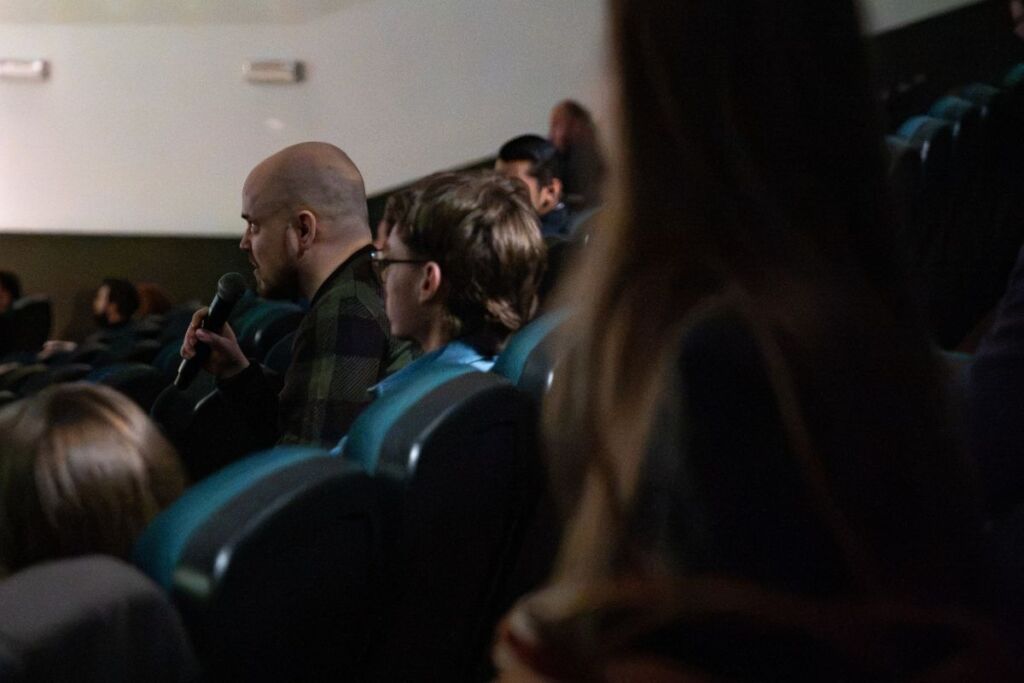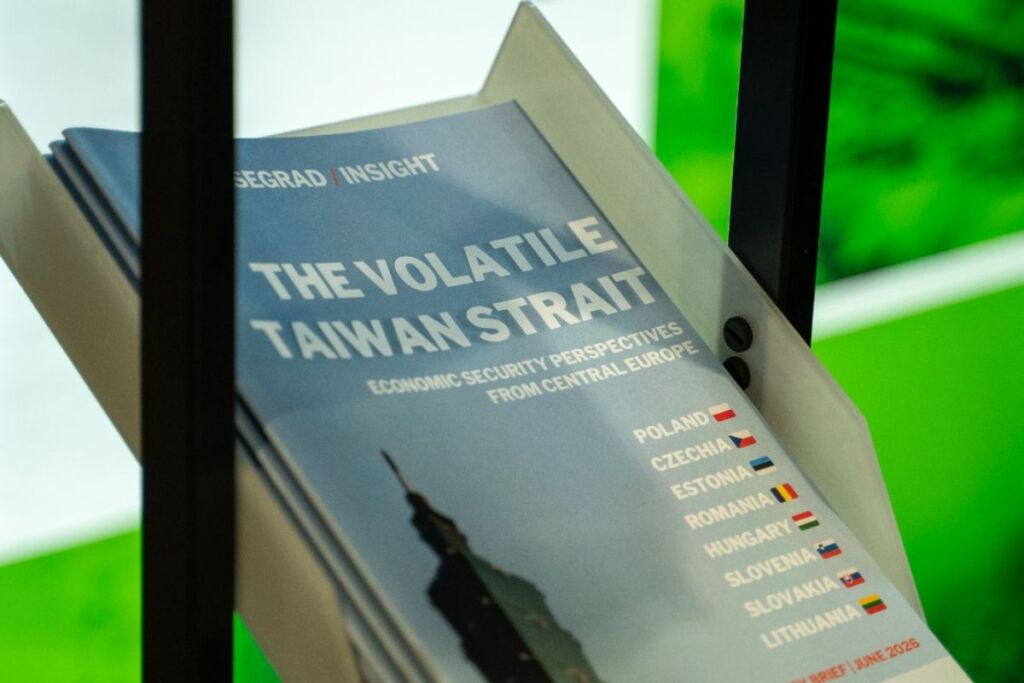
Can record defence spending become a new driver of the Polish economy? How can Europe build technological sovereignty in a world where trade, technology and supply chains have become instruments of competition? These were among the key questions explored during the inaugural Łukasiewicz – ITECH Annual Conference Security for Prosperity, which brought together representatives of public administration, European institutions, business, academia and international expert communities at the National Library in Warsaw on 14 October.
An Opportunity That Must Not Be Wasted
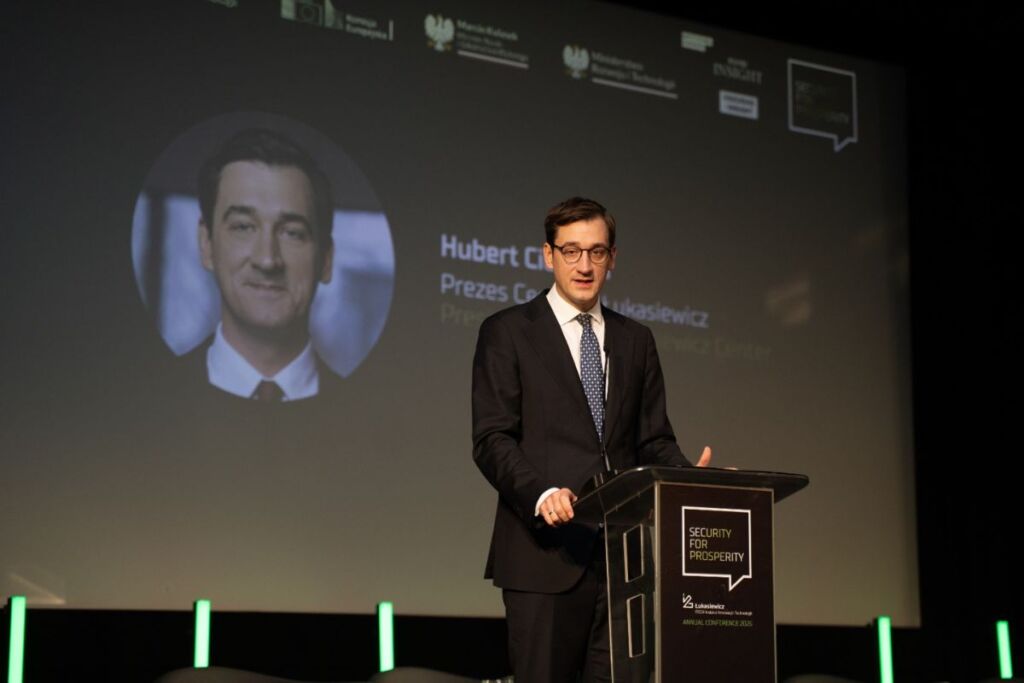
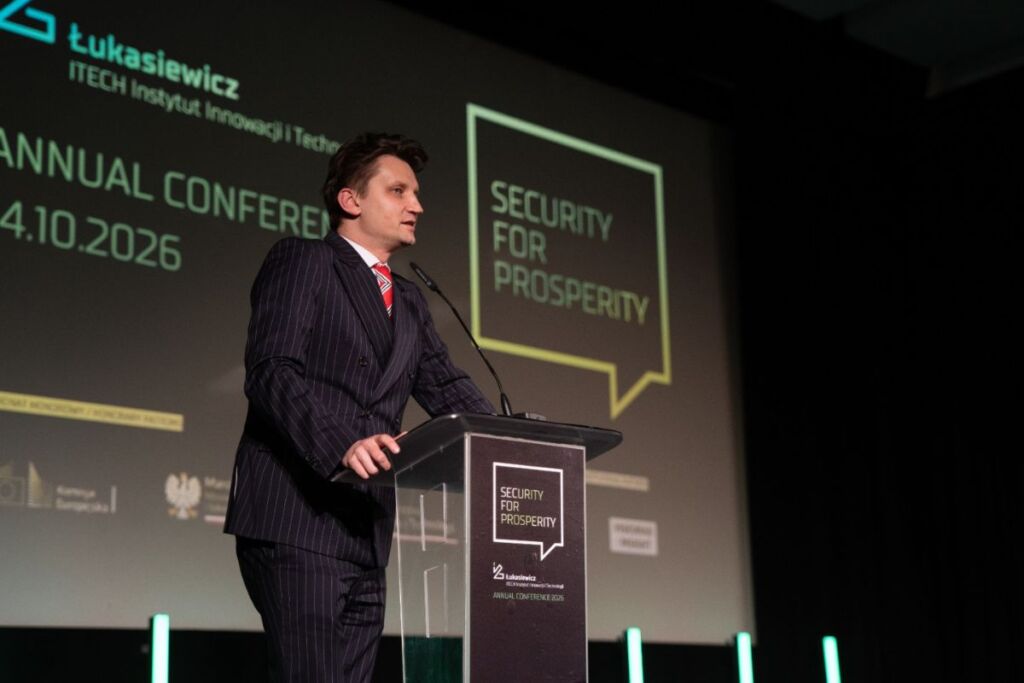
The conference was opened by Dr Hubert Cichocki, President of the Łukasiewicz Research Network, who presented the challenging geopolitical landscape not only as a source of risk but also as an opportunity for Poland’s innovation system and the development of new competitive advantages. He outlined three key dimensions of the discussion.
The first was the defence industry. Record levels of defence spending, he argued, could transform it into a major economic sector in its own right, while increasing the share of R&D in defence procurement could channel tens of billions of złoty into Polish innovation.
The second was technological sovereignty. Building complete self-sufficiency across every link of the value chain is an illusion, he noted. Instead, Poland should make deliberate and consistent choices, focusing on areas where it already possesses strong capabilities and expertise.
The third concerned the quality of institutions. Dr Cichocki also highlighted the recent transformation of the Łukasiewicz Research Network: the share of defence and dual-use projects has risen from 12.5% to 68%, the average project value has increased severalfold, and the Network has launched a space programme worth PLN 2.5 billion.
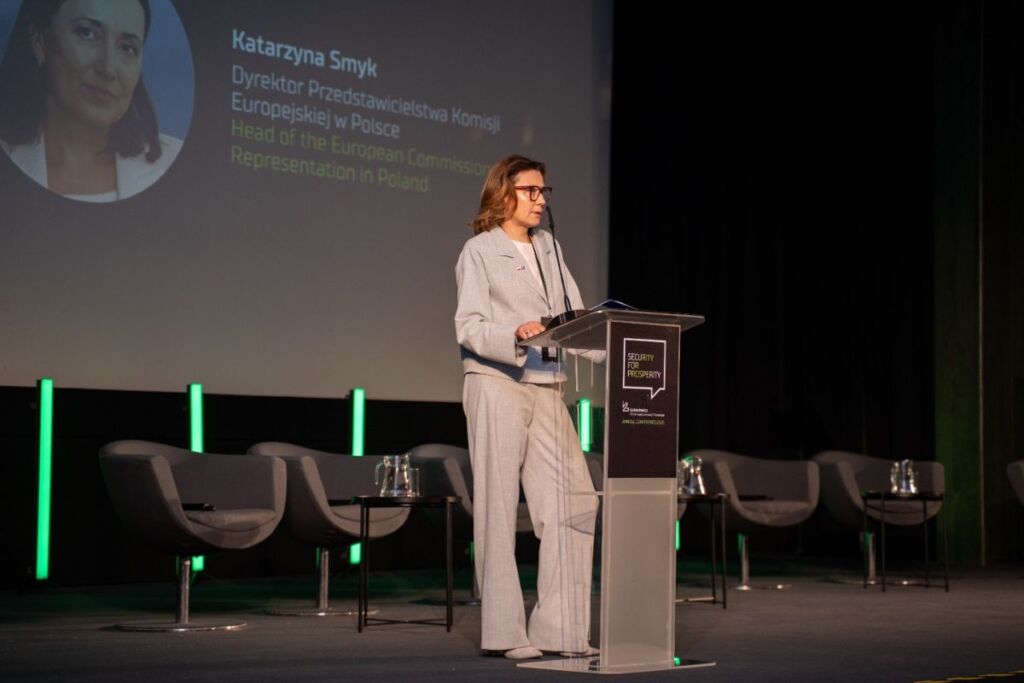
Katarzyna Smyk, Head of the European Commission Representation in Poland, spoke about the three pillars of Europe’s strategic autonomy: defence, technological sovereignty, and energy security. “Europe is experiencing a geopolitical awakening,” she noted, pointing to the €150 billion SAFE instrument, the development of a military Schengen area, and efforts to strengthen the EU’s eastern flank. According to Smyk, the European Commission’s ambition is to ensure that the technologies of the future are “designed, developed, and manufactured in Europe.” She presented Poland as one of the driving forces behind Europe’s resilience and a leading beneficiary of the SAFE programme, with investments amounting to as much as €44 billion.
Dr Michał Matlak, Director of Łukasiewicz – ITECH and host of the event, announced that the Warsaw conference marks the launch of an annual series that will continue with future editions in Brussels. He explained that the Institute will closely monitor developments within the European Union while also drawing inspiration from some of Asia’s most dynamic economies, including India, Vietnam, Taiwan and South Korea. At the same time, he warned against viewing European policies as “an excuse for the lack of strategy at the national level.” “The European Union will not solve our problems for us. We are the European Union, and it is up to us to take an active role in addressing them,” he stressed.
Georgia as a Warning for Europe
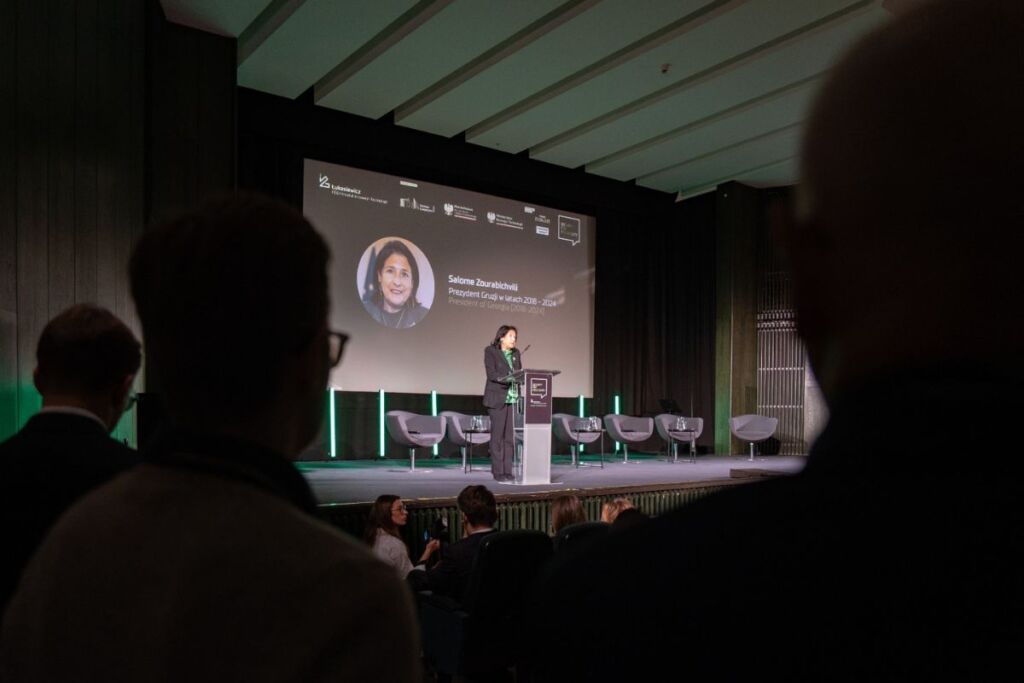
One of the most compelling and emotionally charged moments of the conference was the keynote address by Salome Zourabichvili, President of Georgia from 2018 to 2024. She described her country as a “testing ground” for Russia’s strategic ambitions. In her view, the West’s limited response to the 2008 war in Georgia emboldened Moscow, paving the way for the annexation of Crimea in 2014 and the full-scale invasion of Ukraine in 2022. Today, she argued, Russia is testing in Georgia a model of “state capture” that does not rely on tanks or military force.
According to Zourabichvili, the main tools of this strategy include oligarchic influence, propaganda amplified by social media and artificial intelligence, legislation modelled on Russian practices that weakens civil society, and efforts to sever ties with Europe. She warned that elements of this model could be exported to other countries as well. At the same time, she stressed that the greatest strength of the West lies in its capacity for innovation, something Russia struggles to replicate because genuine innovation can only flourish in a free society.
Later in the programme, during a conversation with Raphael Minder, Central Europe correspondent for the Financial Times, the former Georgian president highlighted another challenge for Europe: post-war Ukraine. “Russia will not win this war, nor will it subjugate Ukraine in the way it originally intended. But the danger may come later. It will come through elections,” she warned.
A Golden Age, But for How Long?
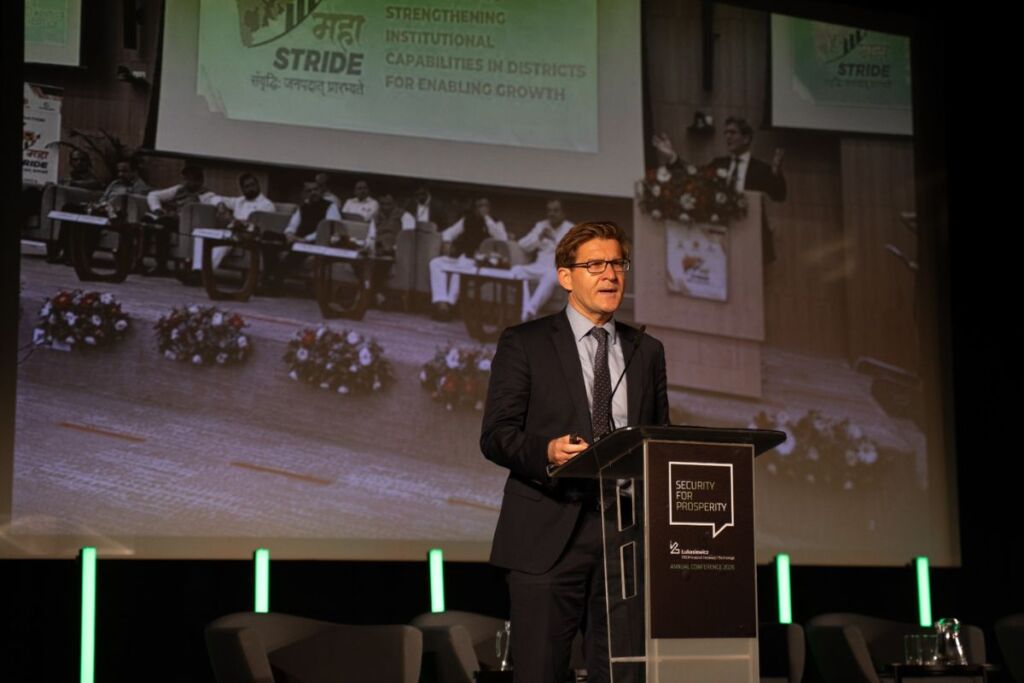
The keynote address by Prof. Marcin Piątkowski of Kozminski University, a former World Bank economist, offered a largely optimistic assessment of Poland’s economic trajectory, albeit with a clear note of caution. He argued that Poland is currently experiencing the most successful period in its history. Since 1989, income per capita has increased nearly fourfold. “Poland began its transformation as a country slightly wealthier than Jamaica. This year, it will become wealthier than Japan and Spain,” he noted, illustrating the scale of the country’s progress.
Looking ahead, however, Prof. Piątkowski stressed that Poland’s future prosperity beyond 2035 will depend on its ability to move from imitation to innovation. In his view, the decisive factor will not be the sheer volume of R&D spending, but the quality of institutions capable of turning knowledge and investment into lasting economic growth.
He also offered a stark assessment of today’s geo-economic rivalry. “America ate our digital lunch, and the Chinese are eating our industrial lunch,” he remarked.
Panel I: Technological Sovereignty
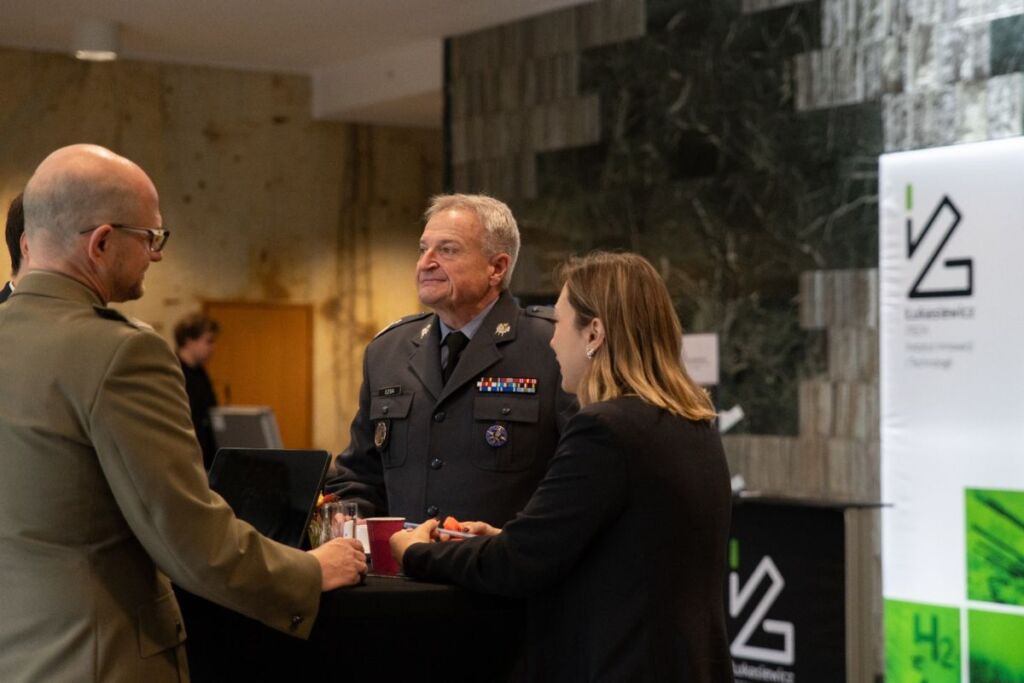
The discussion, moderated by Melania Parzonka (Łukasiewicz – ITECH), began with a worrying figure: despite record research and development budgets, only 4% of European defence spending is allocated to R&D. Wojciech Przybylski (Visegrad Insight) pointed out that coordination is hindered by the failure to treat defence as a common European good. Adam Mazgal (Ministry of Development and Technology) presented the assumptions behind Poland’s first defence industry strategy. Gen. Wojciech Ozga, former head of NATO JATEC, described how the centre in Bydgoszcz is shortening the innovation cycle by drawing on lessons from Ukraine, where, for example, countermeasures against Shahed drones reached the battlefield within a few months rather than a year and a half. Col. Michał Żołnierowicz (Ministry of National Defence) spoke about sovereignty as the freedom to act rather than producing everything independently. Katja Bego (Chatham House) called for a willingness to pay a “sovereignty premium.”
Panel II: Defence Spending and Economic Growth
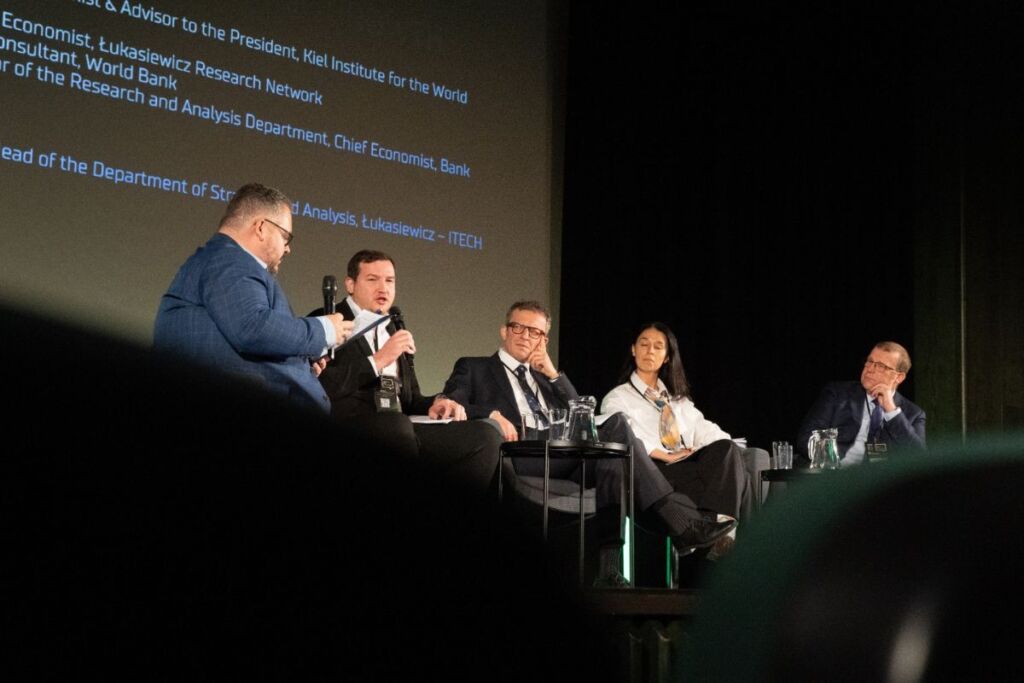
The second IAC 2026 panel, “Defence Spending & Economic Growth,” moderated by Dr Paweł Marczewski (Łukasiewicz – ITECH) and featuring Johannes Binder (Kiel Institute), Janusz Jabłonowski (Łukasiewicz Research Network), Magda Malec (World Bank) and Mateusz Walewski (BGK), revealed a strong consensus: defence spending primarily serves security, while economic benefits are an important but by no means guaranteed secondary effect. Simply increasing expenditure does not automatically generate economic gains. What matters most is how and where investments are made. Panelists highlighted artificial intelligence, autonomous systems and drones as the technologies with the greatest civilian potential, while also stressing the economic value of people trained in advanced technologies. They noted that breakthrough innovations cannot be predicted or planned in advance, which is why governments must be willing to take risks and support research, development and deployment of new solutions rather than limiting themselves to purchasing military equipment.
Fragmentation of the European defence market was a recurring theme of criticism. “In Europe, we combine the worst of both worlds. We lack scale because everyone buys domestically, but we also lack competition,” said Johannes Binder. Joint investments by European countries would make it possible to achieve the necessary scale, use resources more efficiently, reduce costs, and support multiple promising projects simultaneously rather than concentrating on a single one. The local dimension is equally important. Defence innovation ecosystems can strengthen regional economies and develop specialised skills, as demonstrated by Bydgoszcz and the Aviation Valley cluster around Mielec and Rzeszów. As a result, not only large European programmes matter, but also well-targeted local investments. The discussion also highlighted the importance of export rights, in-country maintenance and servicing of defence equipment, and access to private capital. At the same time, panelists pointed to the risks posed by fiscal and demographic pressures.
Panel III: Europe in the New Geoeconomic Order
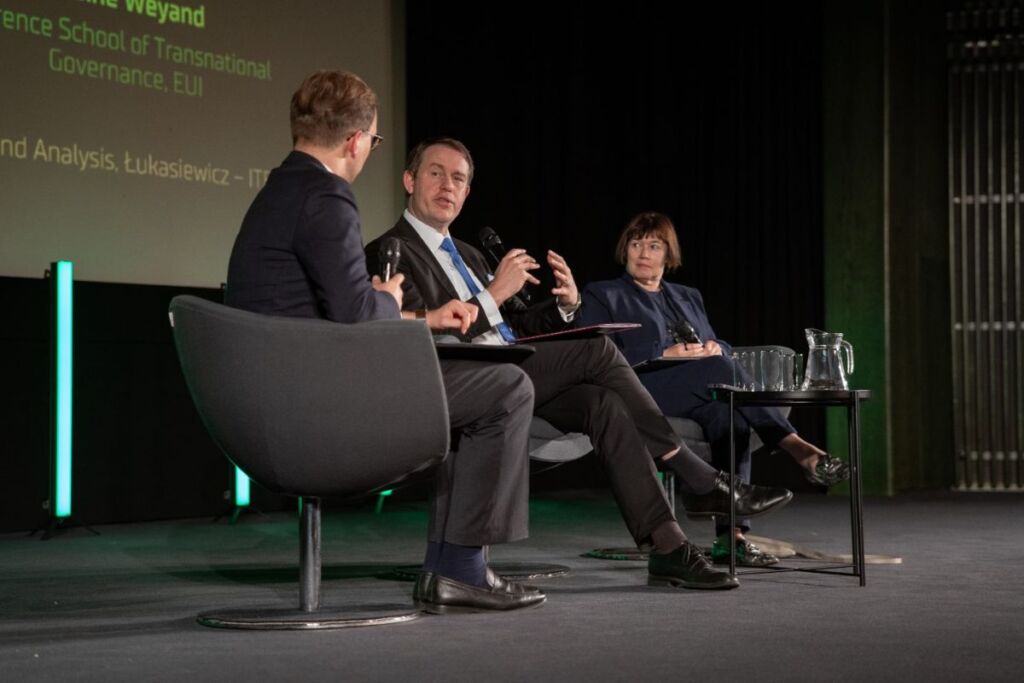
The future of European trade policy was discussed by Michał Baranowski, Deputy Minister of Development and Technology, and Sabine Weyand, former Director-General of the European Commission’s DG Trade. The conversation was moderated by Jan Kłapa of Łukasiewicz – ITECH. The speakers agreed that the rules-based order under which both Europe and Poland had prospered is no longer the reality. “In trade policy, one should usually speak softly and carry a big stick. The EU sometimes does the opposite: we speak very loudly, but somewhere along the way we lost the stick,” remarked Sabine Weyand. Deputy Minister Baranowski stressed the fundamental importance of the issue: “This is an existential conversation. It is not issue number three or four; it is issue number one.”
The panel “Redrawing the Board: Where Are We in the New Geoeconomic Order?” featured Hanna Cichy (Polityka Insight), Bartek Czyczerski (Business & Science Poland), Nicolas Kyriakides (Cyprus Forum), Dalibor Roháč (GLOBSEC), Paweł Śliwowski (Polish Economic Institute) and Sabine Weyand (European University Institute). The discussion was moderated by Piotr Buras of the European Council on Foreign Relations.
The discussion focused on Europe’s place in a new geoeconomic order in which trade, technology and supply chains are increasingly becoming instruments of competition. Participants argued that current U.S. policy is driven more by a coercive style than by a coherent long-term strategy, and that this approach is likely to outlast the current administration. At the same time, Europe remains structurally dependent on American technologies, payment systems and energy supplies. It was also noted that Poland is among the countries most exposed to Chinese competition in manufacturing, as the structure of its exports closely resembles that of China. “We must learn from this that, in competition with China, no sector is truly safe,” one speaker observed. Panelists argued that economic policy should focus on protecting long-term growth rather than preserving outdated industries. Europe’s automotive sector, they suggested, is currently experiencing its own “Nokia moment,” and not every manufacturing activity should be regarded as strategically important.
The panelists agreed that Europe holds significant cards but must learn how to play them effectively. This requires greater assertiveness based on respect for commonly agreed rules, while avoiding protectionist reflexes. It also calls for stronger support for innovation, as today half of Horizon Europe funding goes to established companies and consulting firms, while only 12% reaches new businesses. New market protection instruments are also needed, including safeguard clauses and mechanisms to reduce strategic dependencies, alongside further expansion of trade agreements with partners committed to a rules-based order. Ultimately, however, the foundations remain the same: the Single Market, innovation, and better coordination among Member States.
Panel IV: From Imitation to Specialisation
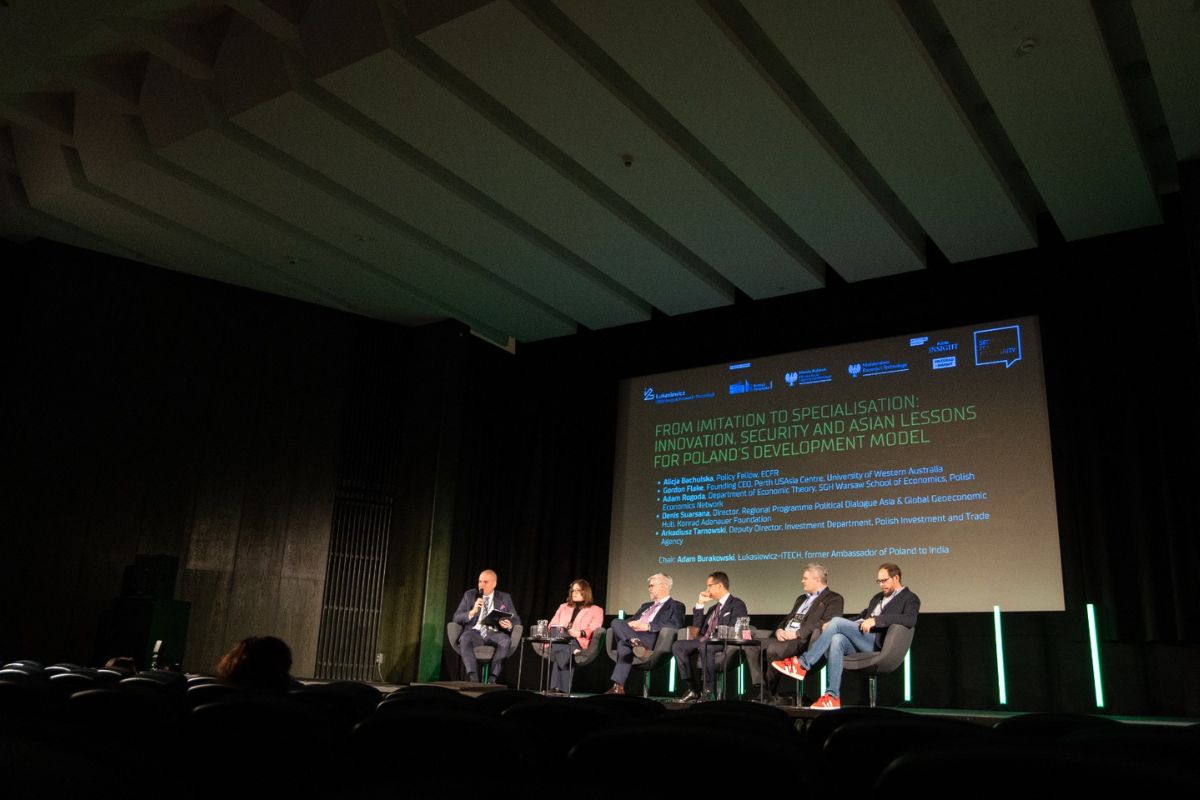
The fourth panel, “From Imitation to Specialisation,” featured Alicja Bachulska (European Council on Foreign Relations), Gordon Flake (Perth USAsia Centre), Adam Rogoda (Warsaw School of Economics), Denis Suarsana (Konrad Adenauer Foundation) and Arkadiusz Tarnowski (Polish Investment and Trade Agency). The discussion was moderated by Dr Adam Burakowski of Łukasiewicz – ITECH, former Ambassador of Poland to India.
The discussion focused on what Poland can learn from Asia’s development experience. The panelists stressed that no successful development strategy can be built without an accurate understanding of China. “No country in the world, including the United States, is capable of competing with China on its own. This truly requires a systemic approach,” one speaker noted. The foundations of success in many Asian economies were identified as education, research and development, and a consistent industrial policy. As one participant observed, “There is no country in modern economic history that has caught up with the developed world without a sophisticated, long-term industrial strategy.” The discussion also highlighted the benefits of integrating civilian and military production, as demonstrated by South Korea’s shipbuilding industry. At the same time, panelists cautioned against uncritically copying Asian development models. They emphasized that Poland has already achieved notable successes of its own, including becoming the world’s second-largest exporter of batteries for electric vehicles.
From Simplistic Assumptions to Real Capabilities
The conference concluded with the presentation of the report “A Farewell to Forms: Europe’s Defence Simplification Drive”, delivered by Marta Krawczyk and Chiara Rinaldi from POLITICO Research & Analysis Division.
The report shows that the European defence debate has shifted from addressing capability gaps to improving the speed of action. The recently adopted Defence Readiness Omnibus package shortens procedures, raises procurement thresholds, and facilitates access to financing. However, it does not in itself guarantee joint procurement or the creation of new production capacities. As the presenters noted, “Facilitating or enabling cross-border cooperation does not automatically mean that such cooperation will actually take place.”
A Common Thread
The conference demonstrated that security can no longer be separated from economics, technology, and industrial policy. Rising defence spending represents a major opportunity, but fully capitalising on it will require a long-term strategy, sustained investment in innovation, stronger coordination across Europe, and faster deployment of new solutions. Otherwise, all that will remain is the bill.
We would like to thank our Honorary Patrons: We would like to thank our Honorary Patrons: the European Commission, Marcin Kulasek, Minister of Science and Higher Education, and the Ministry of Development and Technology. We would also like to thank our institutional partners, Polityka Insight and Visegrad Insight, for their support and contribution to the conference. and participants for their inspiring discussions and valuable contributions to the conference.