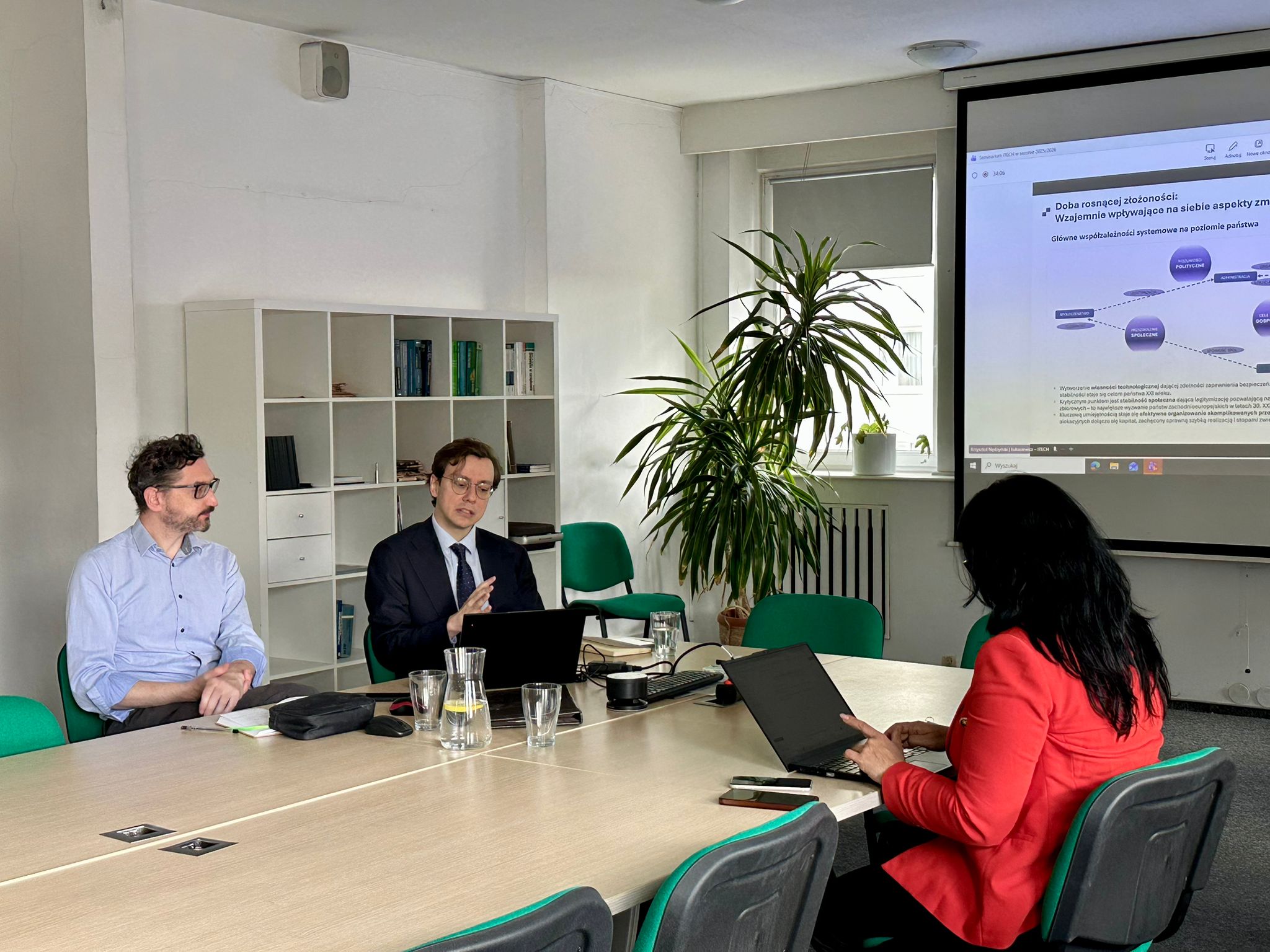
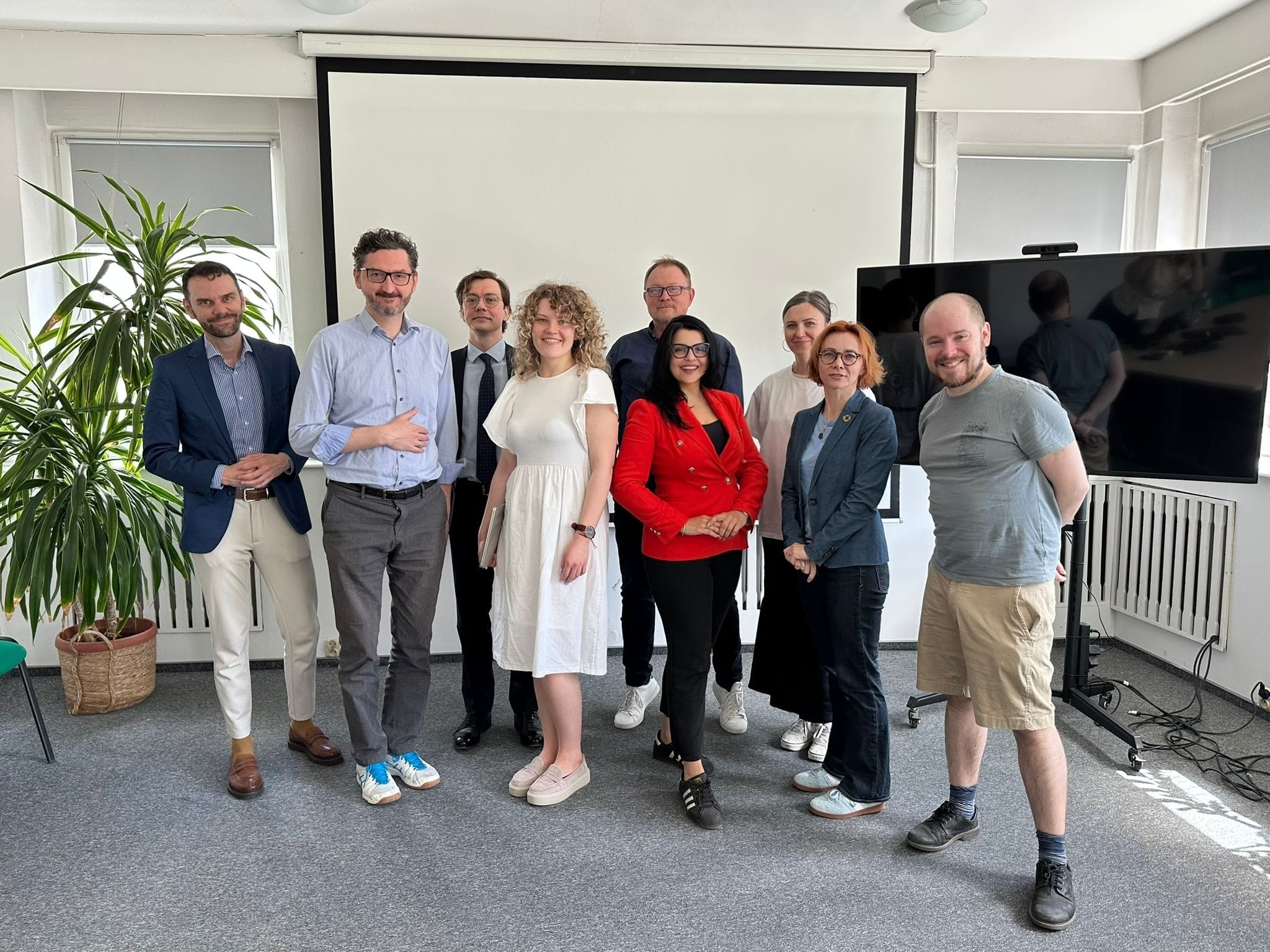
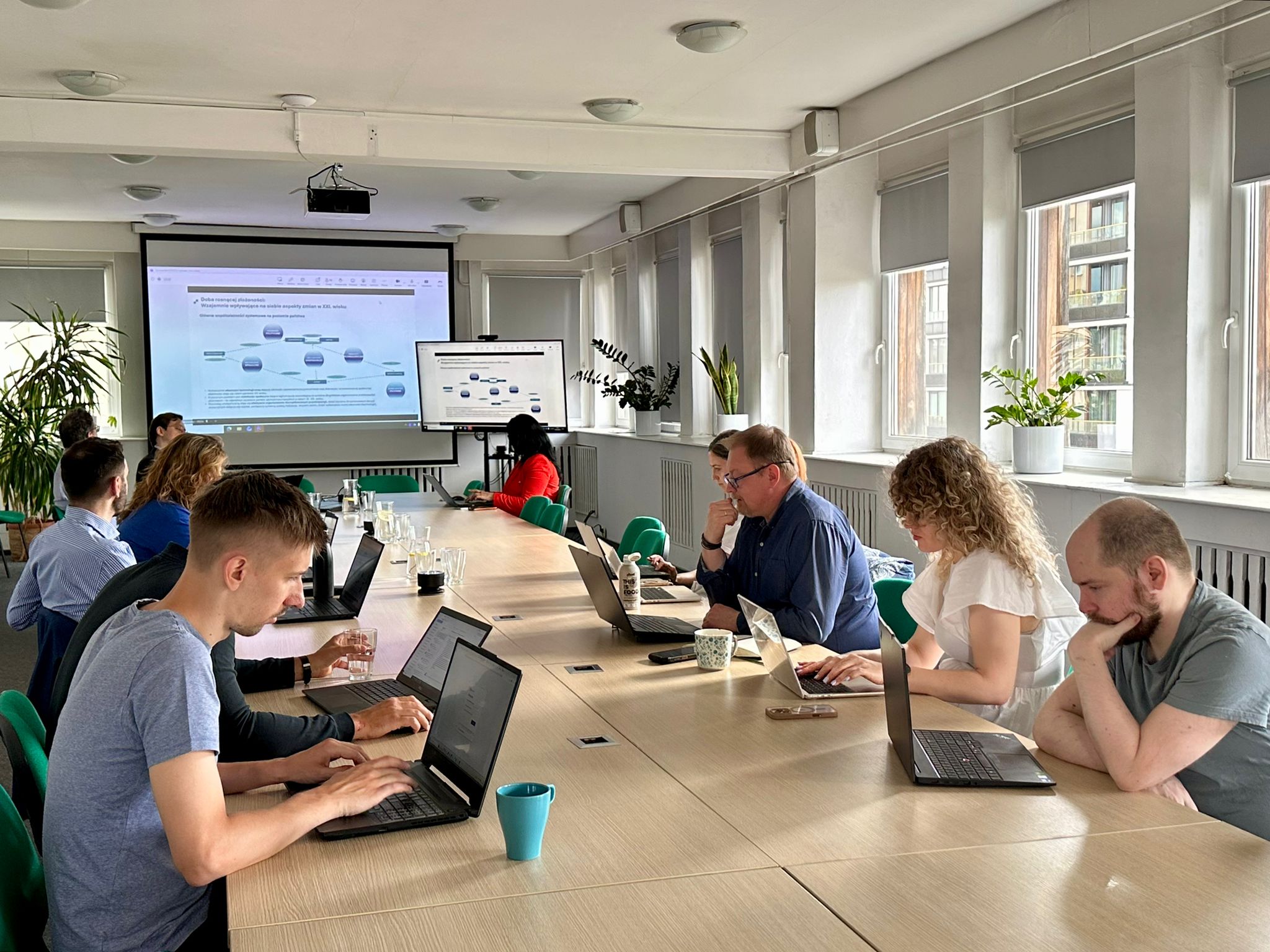
We dedicated the discussion seminar “Polish Dilemmas: Adapting to Socio-Political Changes in the 21st Century,” held at Łukasiewicz – ITECH, to capturing the kind of development landscape we actually find ourselves in today—and the implications this carries for Poland as an aspiring economy that is simultaneously deeply embedded in global value chains.
The meeting’s guest speaker was Krzysztof Mroczkowski, who introduced us to a debate on the transformations of the modern economic, technological and geopolitical order and their implications for our country. The starting point was the observation that we live in an era of rapidly increasing complexity. Securing prosperity in the coming decades will no longer come from merely “catching up” with the West, but from a real capacity to produce new industrial value – including in sectors requiring high productivity, advanced technology and stable, predictable infrastructure.
Social stability and resource allocation
One of the key themes of the seminar was the question of what is actually to guarantee the stability of the political system. We pointed out that maintaining social stability is becoming a prerequisite for the state to pursue an ambitious industrial policy at all. From the administration’s perspective, this means not only managing current social tensions, but above all – the conscious, long-term allocation of resources and capital.
Poland in the global system: from the pension of cheap labor to technological ambitions
In the section on the Polish context, a familiar theme returned: “we have capable people, but we still too rarely execute complex projects locally.” So far, the growth model – based on convergence, integration into the EU market and plugging into supply chains – has allowed us to grow without having the headquarters of global companies at home, or full control over entire value chains.
Today, this model is proving insufficient. Pressure from the U.S. and China – understood as both technological and geopolitical rivalry – means that the existing order is in for a profound reshuffle. Europe needs to redefine its role, and Poland needs to decide whether it remains a peripheral subcontractor or aspires to become a co-creator of technology and co-owner of capital.
In this context, the thesis was made that Poland should make much bolder use of industrial policy tools. We are living in what can be called a neo-mercantilist moment: countries are actively fighting for control of strategic sectors, supply chains and key technologies. China’s development leap – backed by the “Made in China 2025” strategy – is the benchmark here, because it shows how a consistent, coherent policy can translate into a dominant position in Eurasia and the gradual sucking of industry into Southeast Asia.
Energy, data centers and space technologies
An important thread in the discussion was the energy sector as the bottleneck of Poland’s development offer. Even if we have talented engineers and space for investment, without access to cheap, stable, low-carbon energy it is difficult to think of Poland as a serious hub for AI infrastructure: data centers, specialized server rooms or high-energy computing.
At the same time, an example of data centers located in space was presented – motivated by energy and cooling limitations on Earth and the specific advantages of orbital infrastructure. This futuristic theme served as a reference point for the question: can Poland treat data centers (terrestrial version) and selected space technologies as its own product and area of specialization?
It was signaled that Poland has real advantages for this: competent technical staff, a growing space sector, a developing data center infrastructure. However, the problem remains energy – both in terms of quantity and quality – and the complex regulatory and investment environment.
China as a model (and warning) of industrial policy
China’s industrial policy was widely referred to in the debate. The “Made in China 2025” strategy and subsequent development programs clearly communicate the ambition of technological leadership. It’s not just about the level of innovation itself, but more importantly the control of entire value chains in key industries – from semiconductors to the space sector.
The U.S. response shows that we are entering a period of a hard game for technological supremacy: higher tariffs, export restrictions, limiting the ability of third countries to indirectly access Chinese technologies, and supporting local high-tech sectors. This dispute does not bypass Europe and Poland – it affects our ability to import technology, the structure of supply chains and the space for autonomous industrial policy.
New deal, increased risk and Polish restrictions
In one of the conclusions, a strong question was raised: will the emerging new economic and technological order be able to guarantee stability for only two poles – the U.S. and China – leaving the other participants in the system as secondary players?
In such a situation, Poland cannot afford a purely defensive policy. The metaphor of an “inverted China strategy” emerged in the seminar: with our limitations (geopolitical, demographic, institutional), we need more activity, willingness to take risks and invest in selected areas of specialization, instead of a scattered “wish list” without clear priorities.
At the same time, the cost of mistakes – both strategic and executive – is rising. Poland still has not developed a large-scale organizational culture of “delivery” of complex, multi-year technology and infrastructure projects. This is a weakness that, under conditions of global competition, can become a serious development barrier.
Technological unemployment and binary economics
A separate thread was the question of technological unemployment in the AI era. If artificial intelligence increasingly displaces human labor in more sectors, the question is no longer just “how many jobs will be lost,” but also “who will own the income-generating capital in such a system.”
In this context, the concept of binary economics and the ideas of Louis Kels were invoked, including employee stock ownership plans (ESOPs) as a tool for spreading capital ownership among workers. Such solutions – appropriately updated, of course, to the realities of the digital economy – can be one element of a broader response to growing income and wealth inequality and the risks associated with automation.
Demographics and the departure from ceteris paribus
The seminar also strongly echoed the thesis that thinking in terms of “ceteris paribus” – assuming that the environment remains constant – is a dangerous illusion today. If we ignore geopolitical, energy or technological risks in our development analyses, we are in practice increasing their burden and cost in the future.
In the Polish case, one of the key factors is demographics. An aging population, shrinking labor supply and strains on the social security system are creating hard constraints on long-term growth. At the same time, they can act as a catalyst for accelerating automation – which again brings us back to the discussion of technological unemployment and the need for new mechanisms for distributing income from capital.
Poland in the technological revolution: technological and capital participation
In the concluding section, we posed some questions about Poland’s place in the ongoing technological revolution:
- What might be Poland’s actual participation in the “AI stack” – from infrastructure (energy, data centers) to selected application niches and research?
- How to capitalize on the growing competence in the space sector so as not to remain a mere subcontractor, but to build our own recognizable specialties?
- How can Poland participate with capital in the global technological revolution – not only as a country with branches of international giants, but also as an investor (institutional and individual) in their development?
In the background was the metaphor of “manna from heaven”: the surge in production and supply of energy, goods and services that could be generated in the future by breakthrough technologies. The question was how long and how Poland must maintain social stability and investment capacity in order to have a chance to benefit from this “manna” at all – and whether belief in such a scenario is not a form of technoutopianism if it is not accompanied by hard political and institutional decisions.
What’s next?
The seminar didn’t provide easy answers, but it helped name some key dilemmas:
- Between defensive adaptation to a changing order and offensive industrial policy,
- between the role of a peripheral subcontractor and the ambition of co-ownership of capital and technology,
- between short-term relief of social tensions and long-term investment in new sectors,
- between believing in “manna from heaven” and consciously laying the groundwork for a real development leap.
For Lukasiewicz – ITECH is the starting point for further analytical and design work: on industrial policy scenarios, on the consequences of technological unemployment, and on how to practically combine research, innovation and social communication under conditions of accelerating technological revolution.