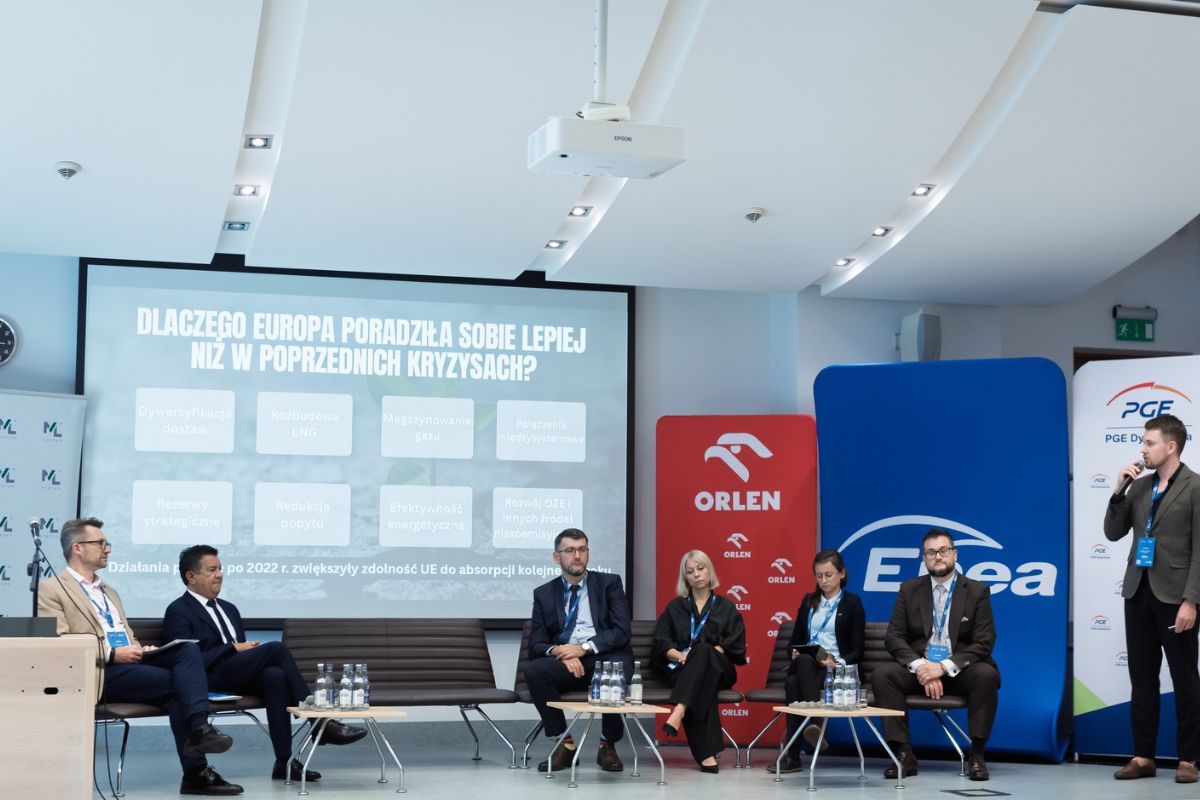
On 28–29 September 2026, Rzeszów hosted the 11th Conference “Energy Security – Pillars and Development Perspectives”, organised by the Ignacy Łukasiewicz Institute for Energy Policy . This year’s edition focused on resilience, security, competitiveness and the energy transition, bringing together representatives of public administration, the energy sector, academia and business.
Łukasiewicz – ITECH was represented by Maciej Skuza from the Energy Transition Research Center, who took part on 29 September in the panel “Geopolitics of Raw Materials and Energy Resilience – Opportunities or Threats in the Context of the Energy Transition?”.
During the panel, Maciej Skuza delivered a presentation entitled “From Hormuz to Europe: The Middle East Crisis as a Test of the European Union’s Energy Resilience. Vulnerabilities, Responses and Lessons for European Energy Security from the Perspective of Six Months of War.” The presentation was directly related to the Łukasiewicz – ITECH policy paper “From Hormuz to Europe: The Middle East Crisis as a Test of the European Union’s Energy Resilience”, prepared jointly with Magdalena Olender-Skorek, PhD.
The presentation provided an opportunity to highlight the publication’s key findings on the resilience of the European energy system to global supply disruptions. The analysis shows that low direct dependence on energy supplies transported through the Strait of Hormuz does not necessarily translate into low vulnerability to a crisis. The strong interconnectedness of global energy markets means that disruptions at one of the world’s key transit points can quickly affect prices and energy security in Europe as well. The authors also point out that, while the EU managed to maintain continuity of supply, it remained exposed to increases in global energy prices.
fot. Arkadiusz Surowiec