The war in Ukraine, the pandemic, floods and disinformation show that national security depends not only on efficient institutions and infrastructure, but also on trust, solidarity and the ability of citizens to work together. Polish society has repeatedly demonstrated its ability to mobilise quickly in the face of crises. But is spontaneous action really enough to ensure long-term resilience? How can we build strong mechanisms for cooperation between citizens, the state and the business sector?
These were the topics discussed in the fourth Łukasiewicz – ITECH debate.
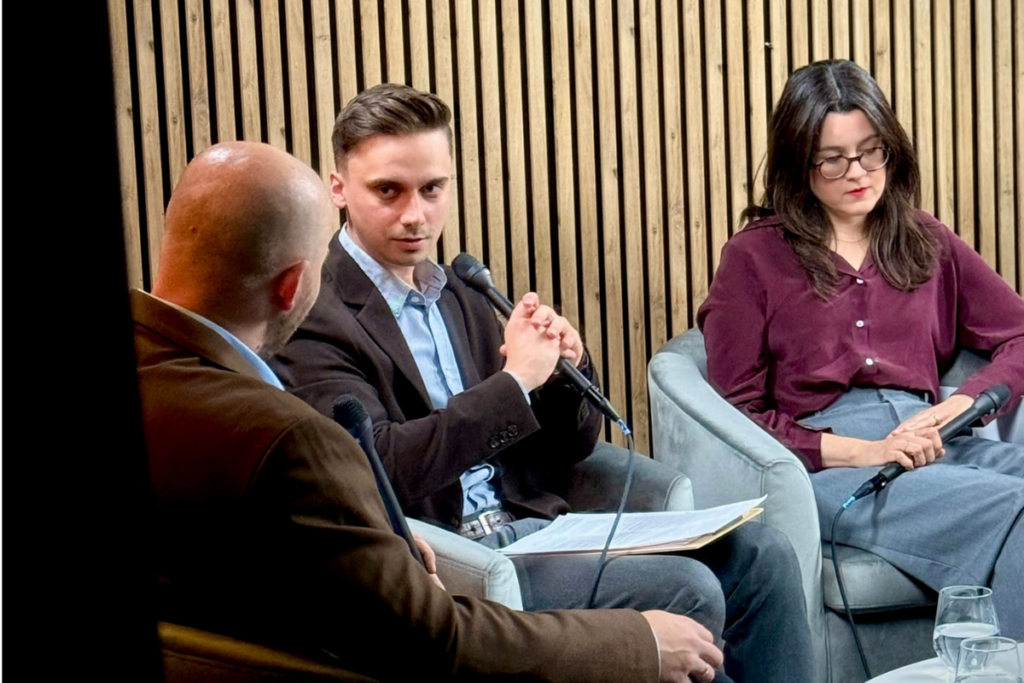
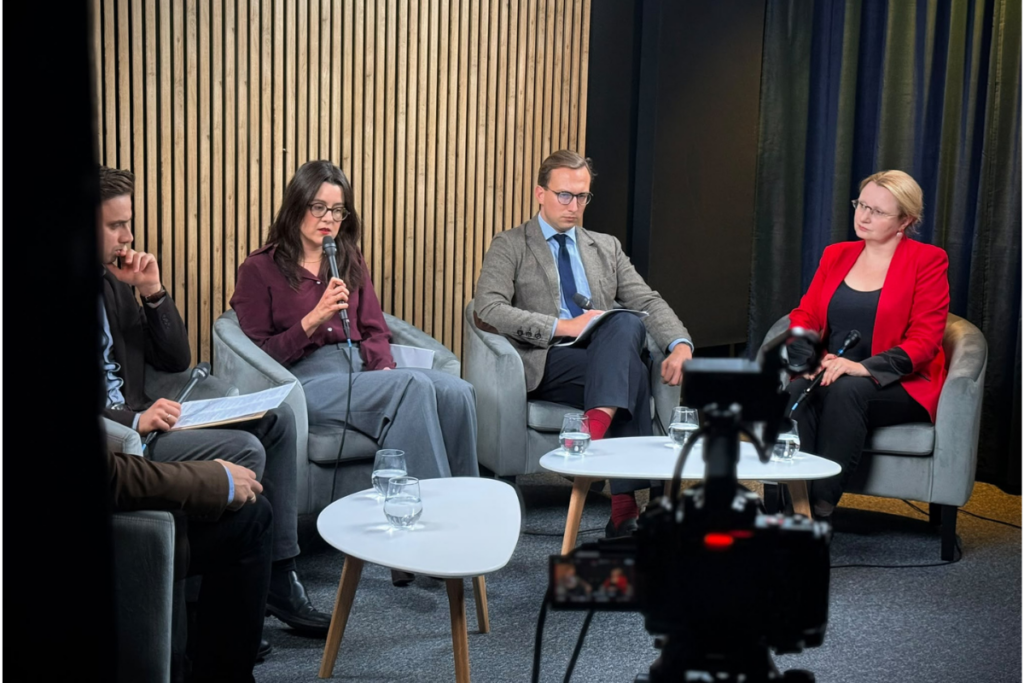
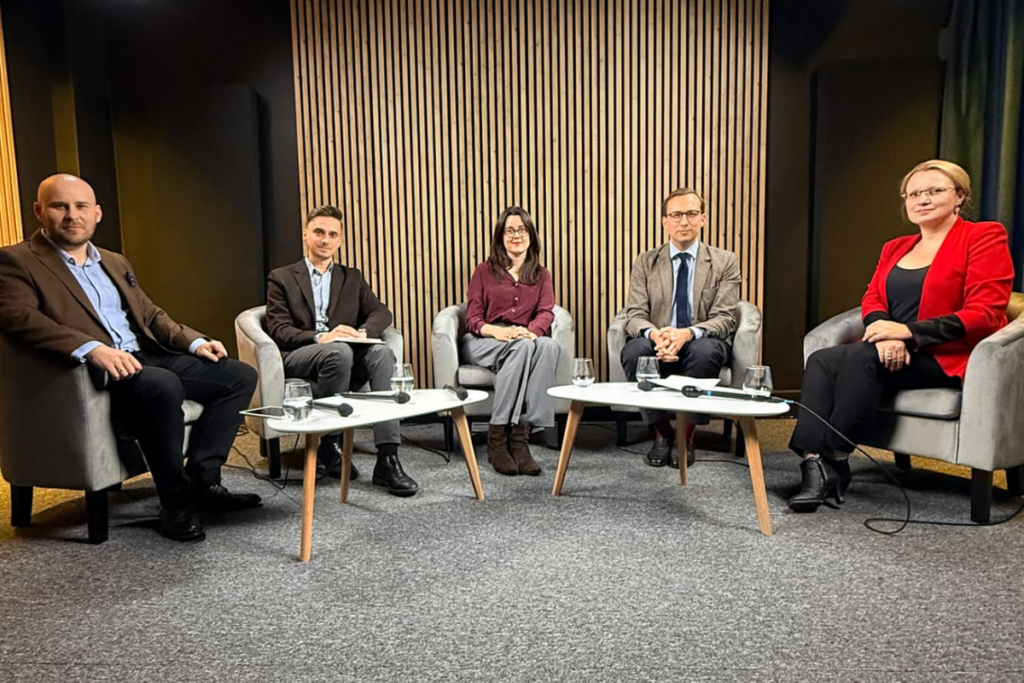
The discussion entitled ‘What holds us together? Social resilience in the face of complex crises’ featured: Dr Magdalena Baran from the University of the National Education Commission in Kraków, editor-in-chief of the monthly magazine ‘Liberté!’ and Senior Fellow at the European Liberal Forum; Dr Weronika Grzebalska from the Institute of Political Studies at the Polish Academy of Sciences; Sebastian Wijas, Deputy Director of the Jagiellonian Club’s Centre for Analysis; and Jan Kłapa, a lawyer and European affairs expert from the Department of Strategy and Analysis at Łukasiewicz – ITECH. The discussion was moderated by Szymon Kępka.
The discussion referred to a report by Dr Magdalena Baran on social resilience and the lessons learnt from recent crises. The experts analysed the role of trust, local communities, public institutions and civil society organisations in building security, as well as the challenges involved in transforming spontaneous solidarity into sustainable mechanisms for cooperation.
Key takeaways from the debate:
1. Social resilience is not just about weathering a crisis, but also about the ability to adapt and change.
Resilience covers three interrelated dimensions: crisis management, adaptation to new conditions, and transformation – that is, drawing lessons and implementing long-lasting changes. Poles have repeatedly demonstrated their ability to mobilise quickly, for example during the pandemic and the refugee crisis in 2022. However, the challenge remains in translating these experiences into long-term institutional solutions.
2. Spontaneous solidarity requires sustainable mechanisms for cooperation.
Aid for refugees from Ukraine and grassroots initiatives during the pandemic have demonstrated the enormous potential of social self-organisation. At the same time, long-term involvement can lead to a shortage of resources and burnout amongst those providing help.
Solidarity should therefore be reinforced by appropriate organisational and institutional arrangements. It is also important to ensure a fair distribution of responsibility, so that the cost of responding to crises does not fall disproportionately on certain social groups.
3. The security system should make use of the potential of all sections of society.
Not only public services and institutions, but also older people, women, local leaders and community organisations play a vital role in building resilience. Experts highlighted the unused potential of senior citizens, who possess valuable knowledge of local risks, and of women, who play a key role in education, healthcare, humanitarian aid and administration. Involving different groups in crisis prevention requires tailoring training programmes and creating genuine opportunities for participation.
4. A country’s resilience requires cooperation between the government, citizens and the business sector.
An effective response to threats requires lasting partnerships between public institutions, local authorities, non-governmental organisations and businesses. A significant part of the resources, infrastructure and expertise required during crises lies outside the scope of public administration.
5. Trust and preventing polarization are the pillars of social resilience.
Disinformation, political divisions and low levels of trust in institutions can undermine society’s ability to respond collectively to threats. Even if citizens are able to cooperate in the face of a sudden crisis, this does not automatically mean lasting resilience. This is why civic education, social dialogue and the development of participatory mechanisms are of particular importance. Experts also highlighted the need to create a coherent social resilience strategy, developed with the broad involvement of citizens.
Social resilience must be built up before a crisis strikes
The debate showed that societal resilience requires a shift from spontaneous mobilisation to the long-term building of trust, cooperation and shared responsibility. National security depends not only on the effectiveness of its institutions, but also on whether citizens possess the knowledge, skills and capacity to act collectively.