Polish Basalt Technologies Cluster – Laying the Groundwork for Collaborative Research and Industry Projects
Innovative Materials and 3D Printing
In October, the Cluster focused on laying the groundwork for joint research, development and implementation projects. A key area of interest is basalt-reinforced composite materials, particularly their production and prototyping using 3D printing technologies. Our aim is to align the needs of businesses with the research expertise of the Łukasiewicz Research Network and universities, while developing ideas that can progress from initial concepts to pre-commercialisation research and practical applications.
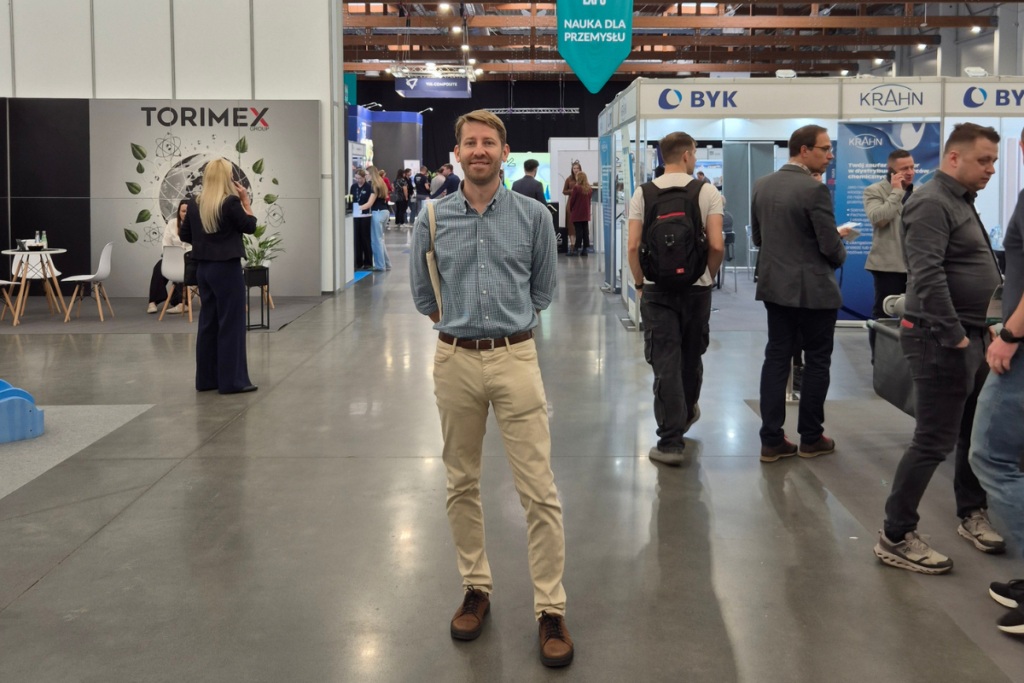
One of the highlights of October was Kompozyt-EXPO, the composites trade fair held in Kraków on 7–8 October. Attending the event provided an opportunity to explore emerging trends in the industry and establish connections that could support future projects involving basalt-reinforced composites.
Research Funding and Project Development
We also began exploring available funding opportunities. In connection with the Science4Business – Science for Business funding call, we are working to establish a consortium. We also attended a meeting organised by the Polish Agency for Enterprise Development (PARP) on the “Development of Cluster Services for Businesses” funding call, aimed at coordinators of Supraregional Growth Clusters. Our goal is to strengthen collaboration among Cluster members, advance pre-commercialisation research and develop projects that address the needs of businesses.
Research–Industry Partnerships
At the heart of this approach is bringing industry and academia together. Businesses contribute their understanding of market needs and the practical requirements of bringing new technologies into use, while universities and research institutions provide scientific expertise and research infrastructure. This is reflected in ongoing discussions with the Łukasiewicz – Krakow Institute of Technology and the Faculty of Civil and Environmental Engineering and Architecture at the Warsaw University of Life Sciences (SGGW), exploring opportunities to collaborate on research into basalt-based materials and develop joint projects.
One potential project area involves using 3D printing to manufacture and prototype components made from basalt-reinforced composites. As we develop the project concept, we aim to assess the technological feasibility, define the scope of pre-commercialisation research and identify the types of prototypes needed to evaluate the practical potential of these solutions. The scope of work will be further refined in collaboration with interested businesses and research partners.
Dual-Use Technologies and Security
Looking ahead, we also aim to develop solutions with dual-use potential, designed for civilian applications while also addressing security and defence needs. In this context, the Cluster’s October activities included participation in the Security for Prosperity conference, held in Warsaw on 14 October. Attending security-focused events helps us broaden our search for potential partners and explore new applications for emerging technologies.
Collaboration and Cluster Ecosystem Development
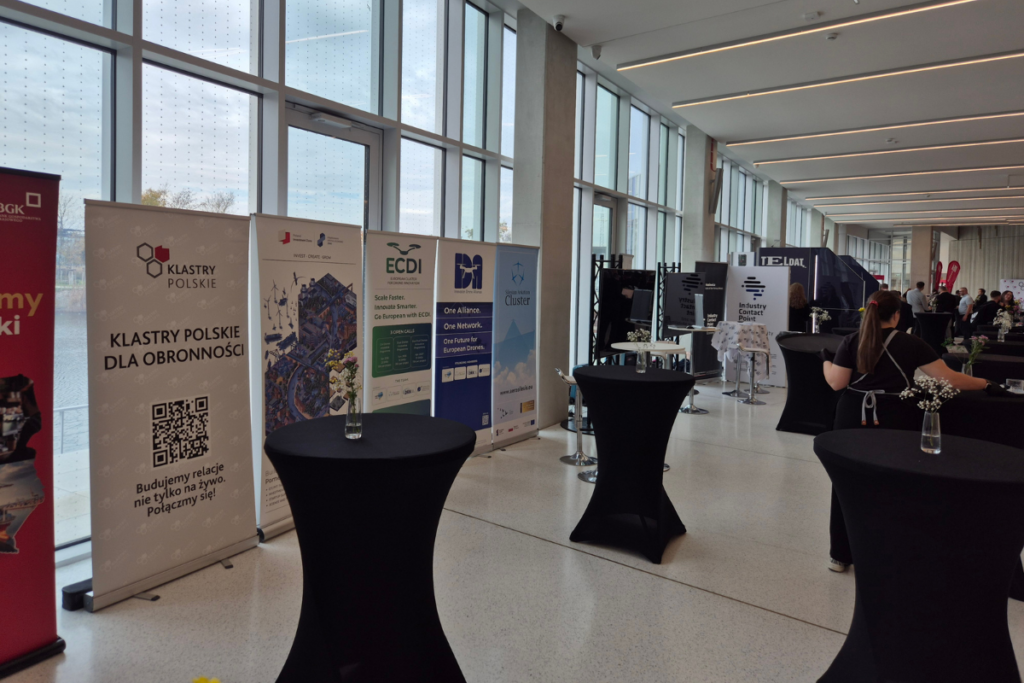
We also attended the Polish Clusters Congress in Bydgoszcz, where we explored different pathways for cluster development. Events like this provide valuable opportunities to exchange experiences and build relationships that can support the formation of consortia and the development of joint projects.
We invite Cluster members, as well as interested businesses and institutions, to share their technological needs, project ideas and interest in collaboration in areas such as basalt-reinforced composites, 3D printing, agriculture and dual-use technologies. Identifying common challenges and potential partners will be an important step towards preparing projects for upcoming funding calls.