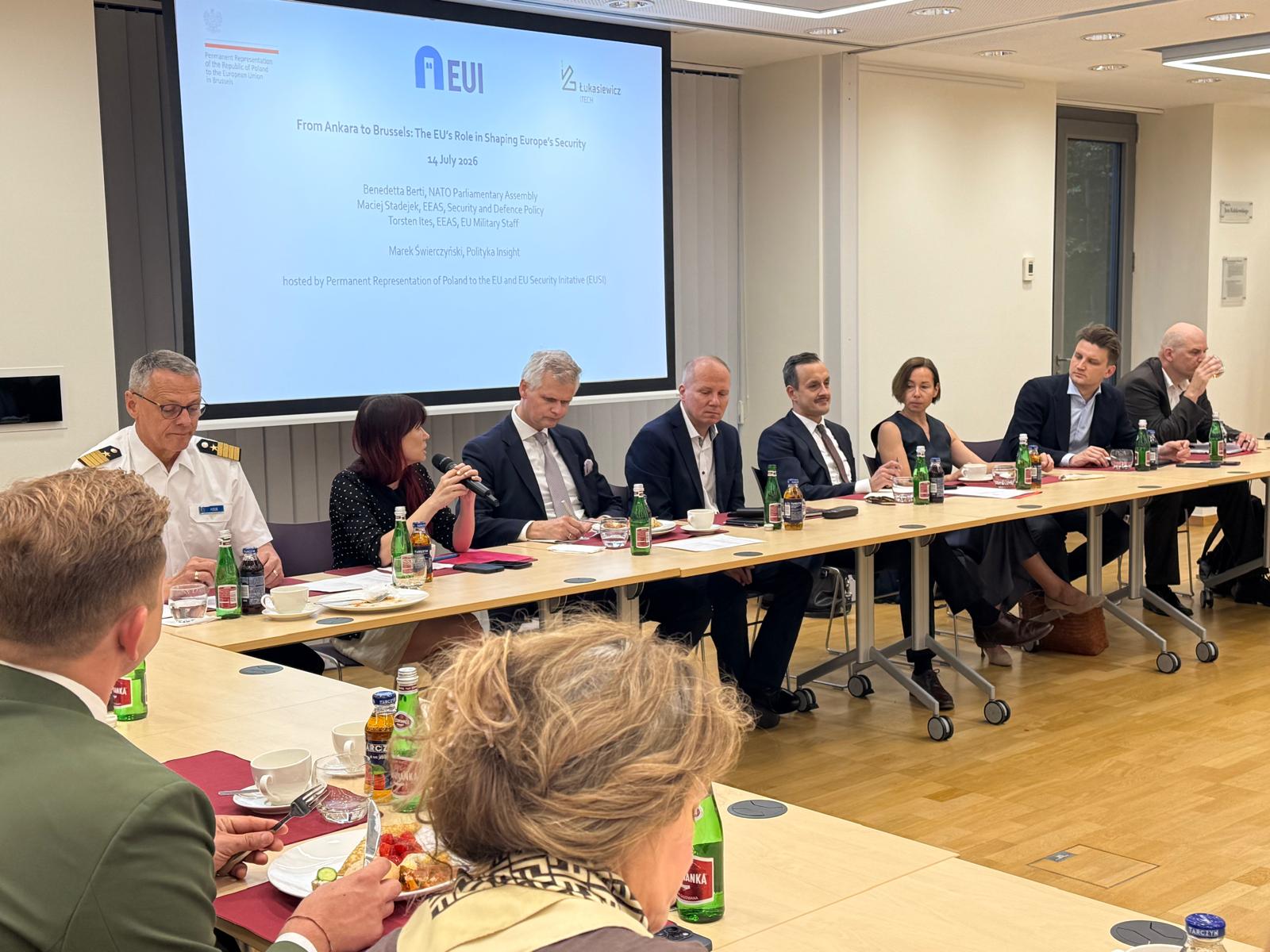
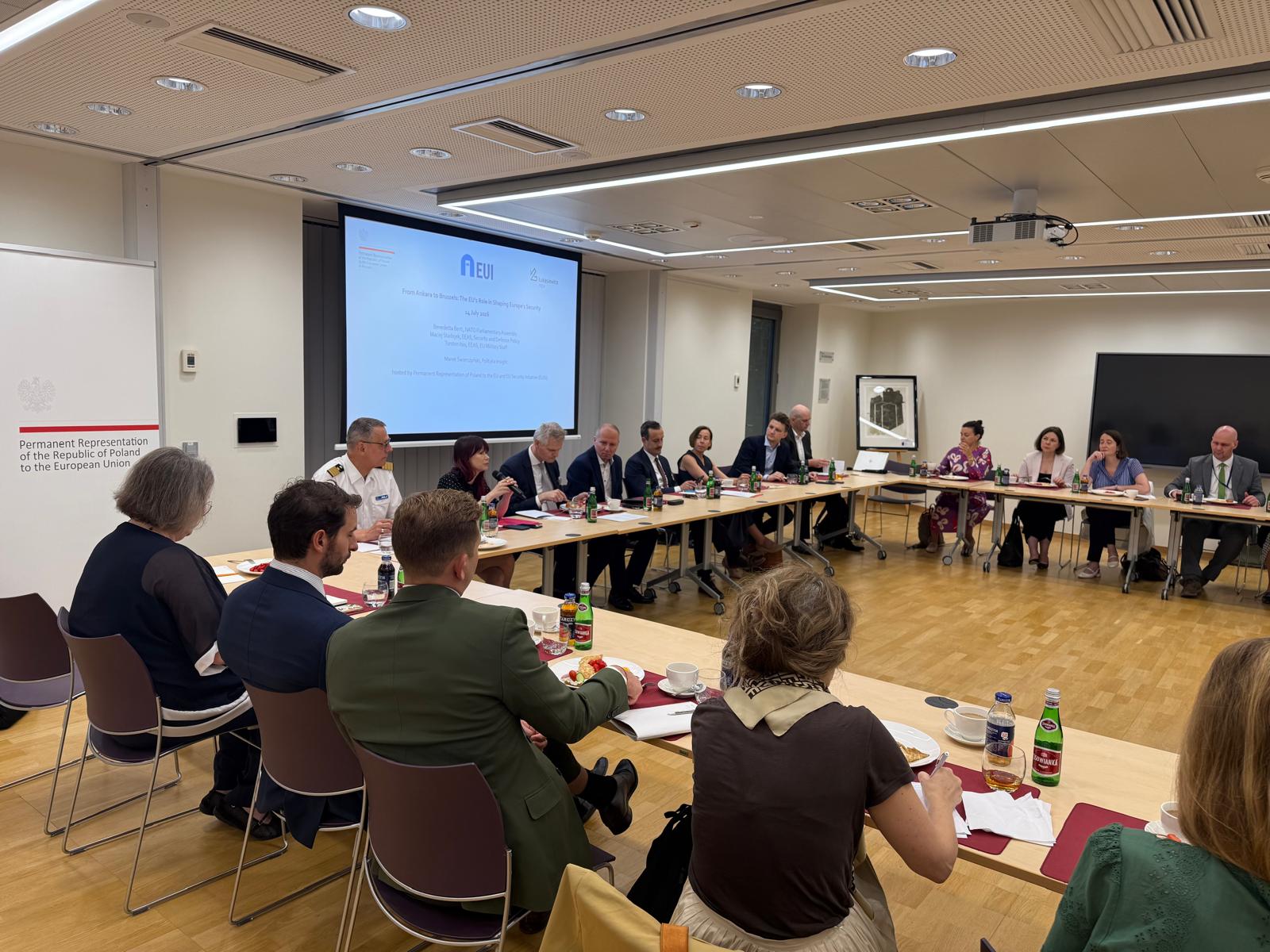
As a co-host of the EU Security Initiative, Łukasiewicz – ITECH is providing a platform for expert debate on the most pressing challenges facing European security and defence following the NATO Summit in Ankara.
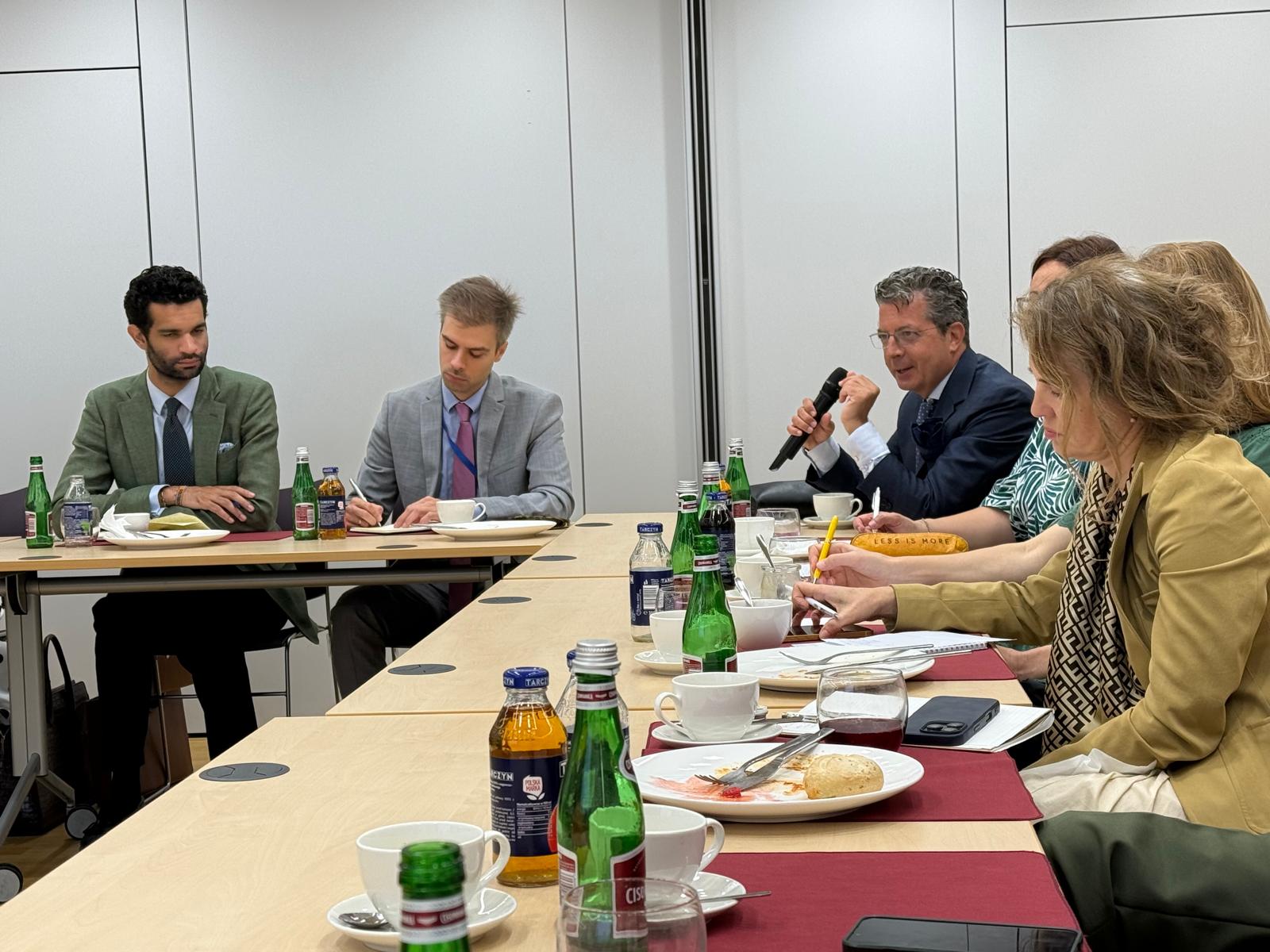
Yesterday, a working breakfast discussion on the conclusions of the recent NATO Summit in Ankara took place at the Permanent Representation of the Republic of Poland to the European Union. The meeting was attended by a large group of EU Member State ambassadors serving on the European Union’s Political and Security Committee (PSC). The PSC is a key body responsible for monitoring the international situation and helping to shape the EU’s foreign and defence policy. It also exercises political control and strategic direction over the EU’s crisis-management operations and military missions.
The discussion brought together Maciej Stadejek, Director for Security and Defence Policy at the European External Action Service; Benedetta Berti, PhD; Secretary General of the NATO Parliamentary Assembly; Torsten Ites of the EU Military Staff; Ambassador Michał Mazur, Poland’s representative to the PSC; and Michał Matlak, PhD; Director of Łukasiewicz – ITECH, as well as prof. Monika Sus from the European University Institute in Florence. The discussion was moderated by Marek Świerczyński, Head of Security and International Affairs at Polityka Insight.
The discussion centred on strengthening Europe’s deterrence capabilities and the current state of transatlantic relations. A key foundation of effective deterrence is closer coordination between NATO and the European Union, as well as among Member States, including in the area of so-called strategic enablers — capabilities that are critical to the conduct of operations, such as strategic transport, air-to-air refuelling and reconnaissance.
It was emphasised that the two organisations must avoid two pitfalls: duplicating efforts and structures on the one hand, and becoming disconnected from one another on the other, with parallel initiatives no longer communicating or coordinating effectively.
Considerable attention was also devoted to the role of the defence industry and to communicating the rationale behind rising defence expenditure. Participants highlighted the need for the military to set clear performance targets for manufacturers and governments, ideally in the form of a specific “shopping list” that would provide greater predictability for future purchases and establish measurable benchmarks.
In this context, participants also discussed the need to reduce fragmentation in Europe’s military equipment landscape, the pace of implementation of flagship projects developed under PESCO, and the EU’s deepening defence cooperation with Canada.
The discussion strongly underscored the view that, when it comes to interoperability and military mobility across Europe, the European Union has an even greater role to play than NATO. It is the EU’s regulatory, infrastructure and financial instruments that ultimately determine how quickly allied forces can be moved in a crisis.
Participants also referred to the instruments introduced under the EU Preparedness Strategy and its first tangible results, emphasising that meeting today’s challenges requires the capacity to mobilise both military and civilian resources with exceptional speed.
That was the second event in the series held under the banner of the EU Security Initiative, co-hosted by Łukasiewicz – ITECH and the European University Institute in Florence. In December last year, we used the same format to discuss the effectiveness of Ukraine’s military innovation cycle.
We would like to thank all participants for attending and for their active engagement in the discussion.