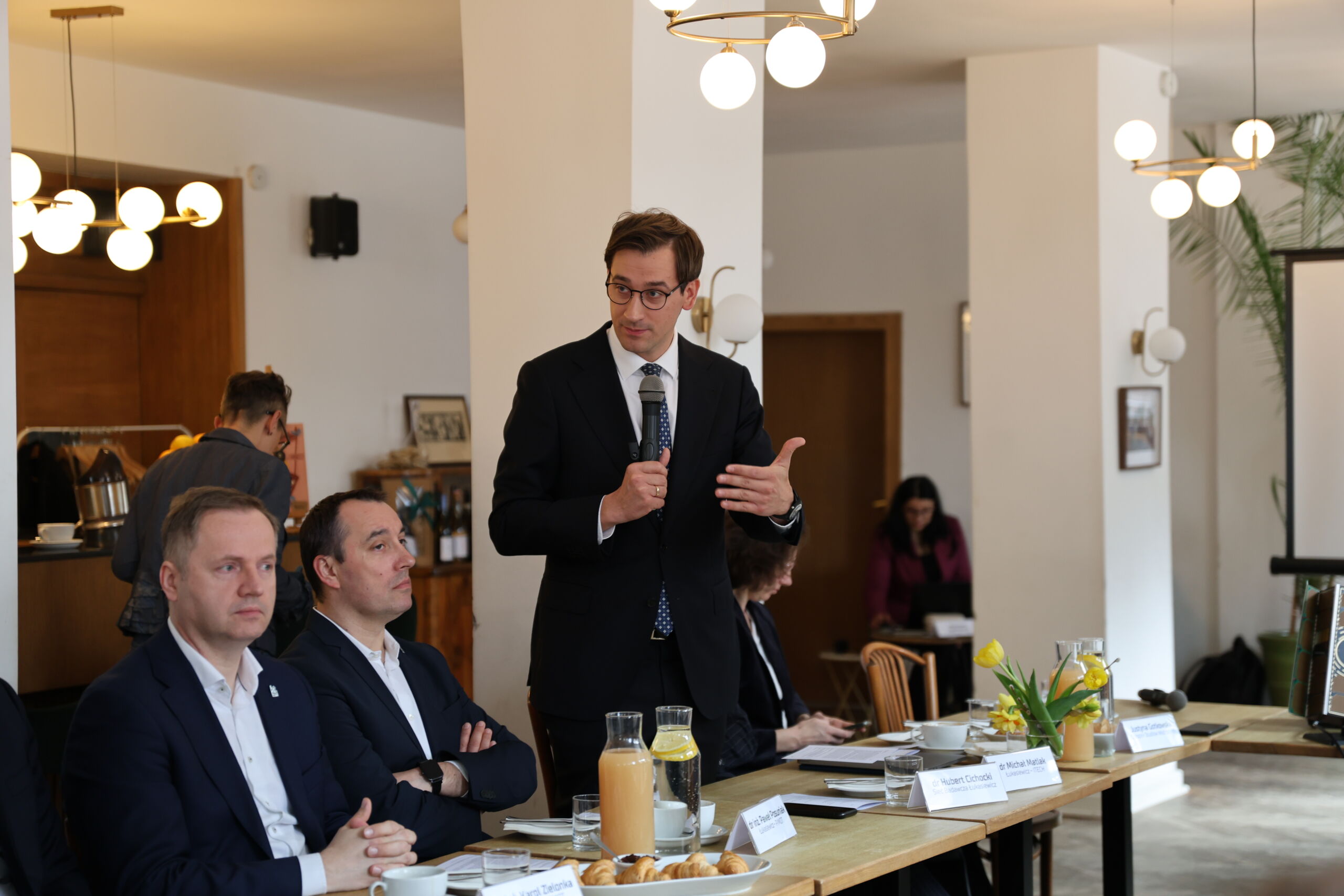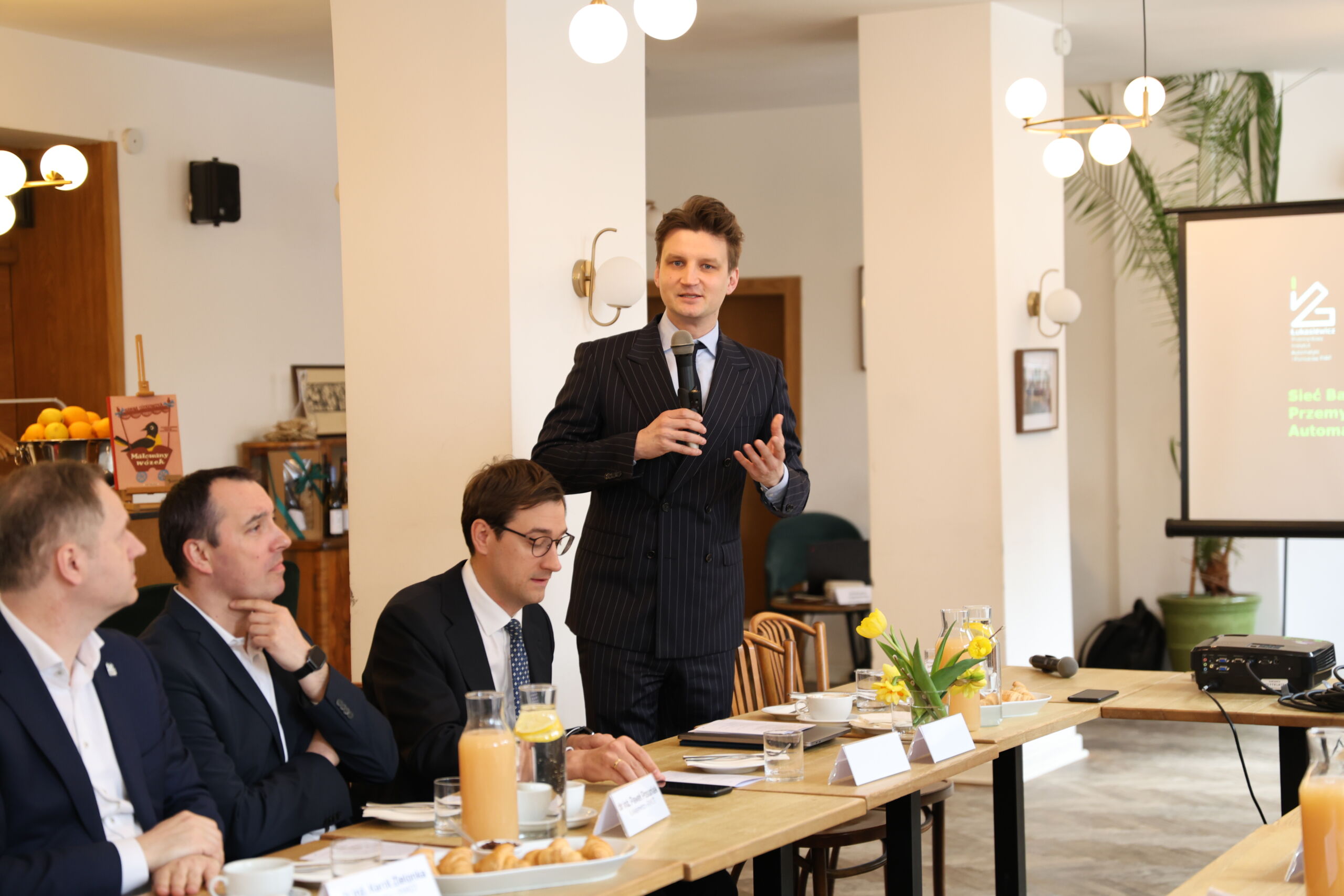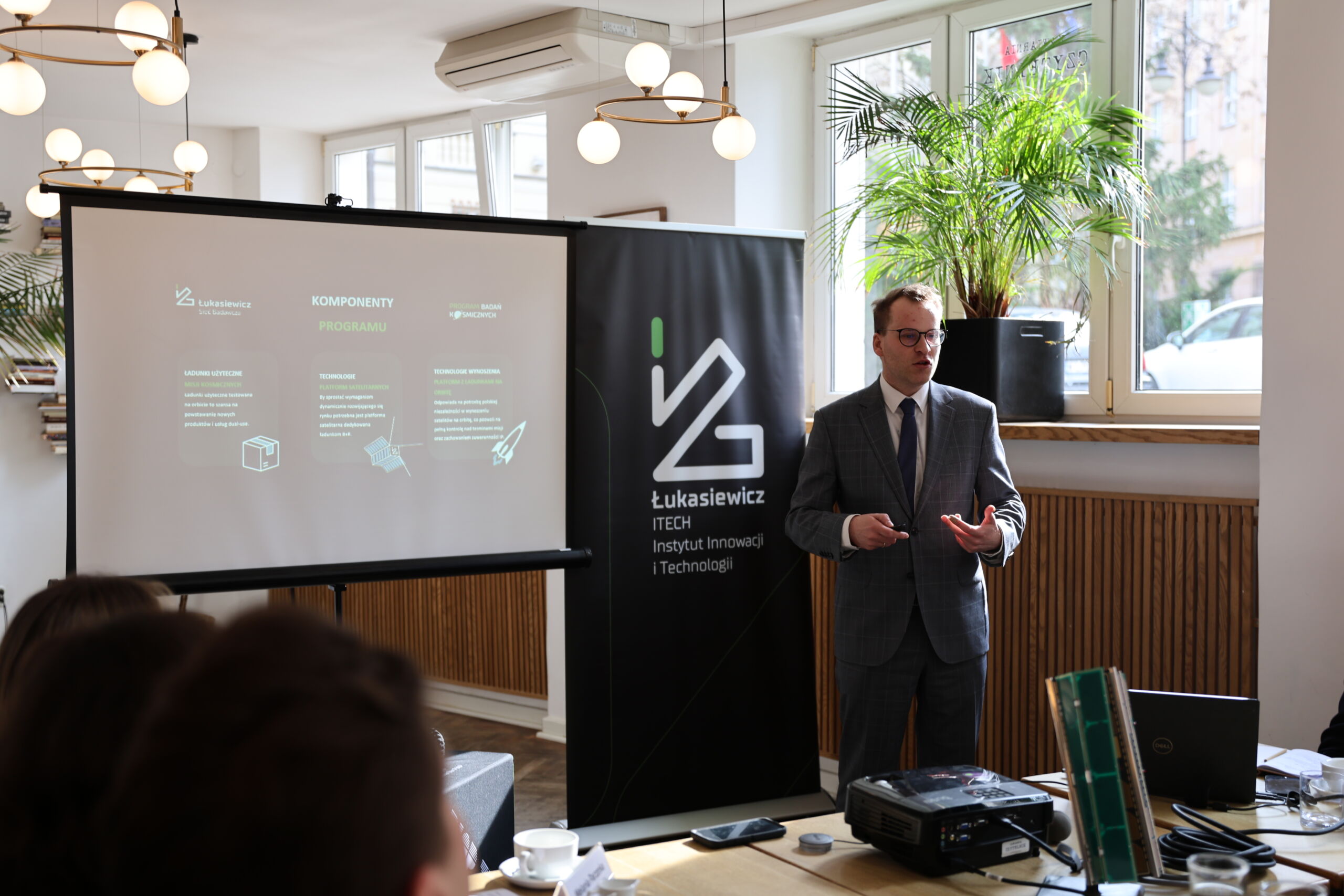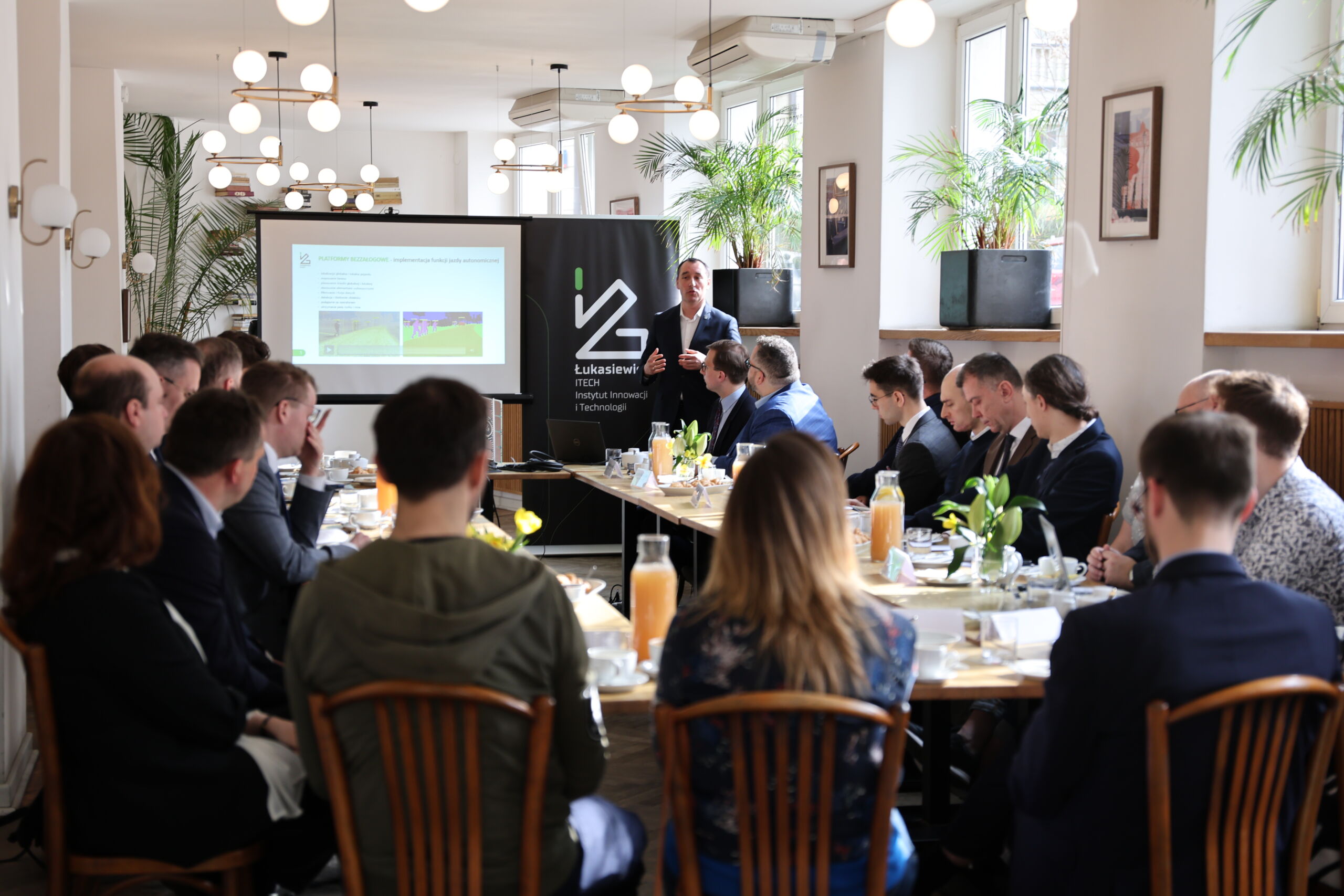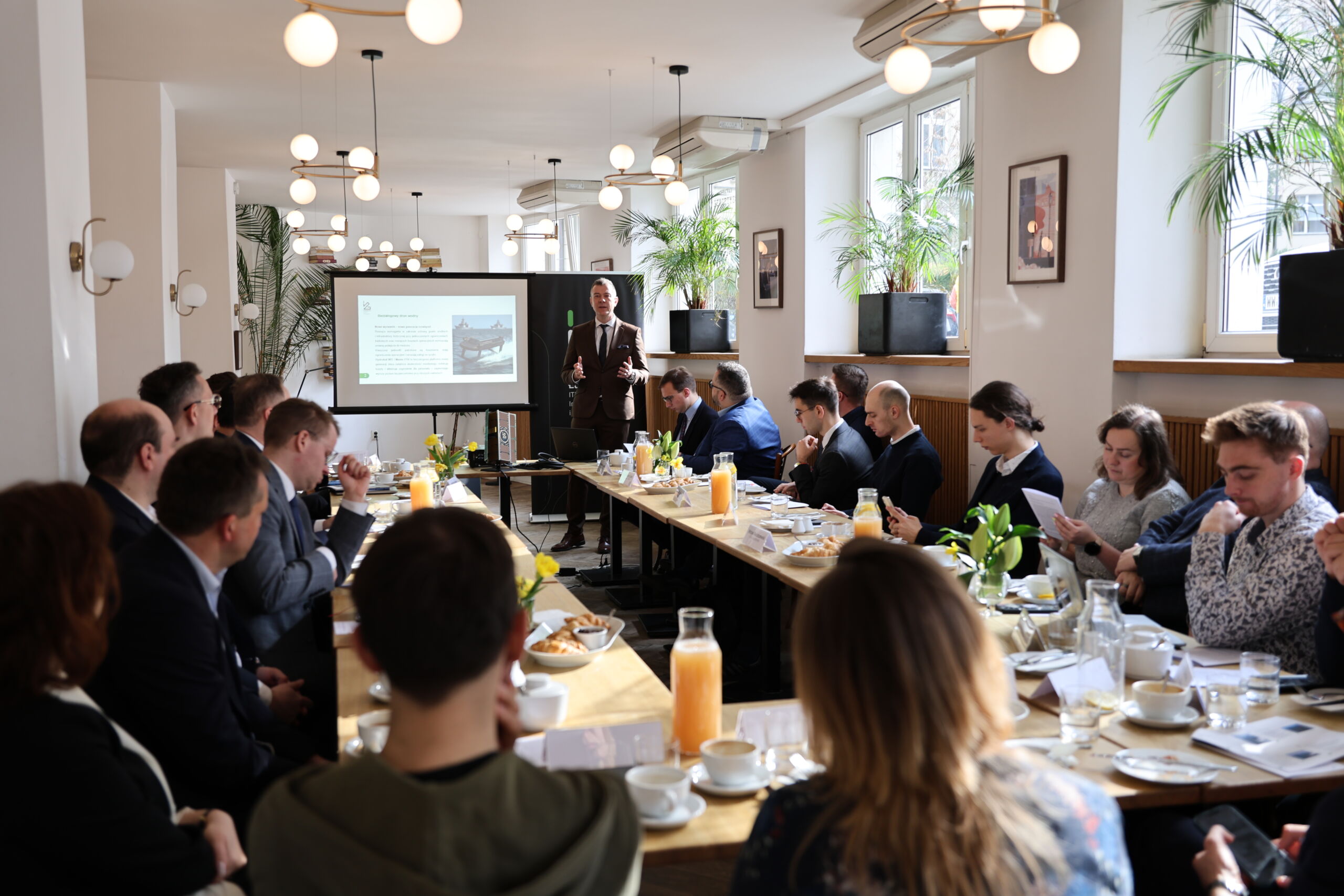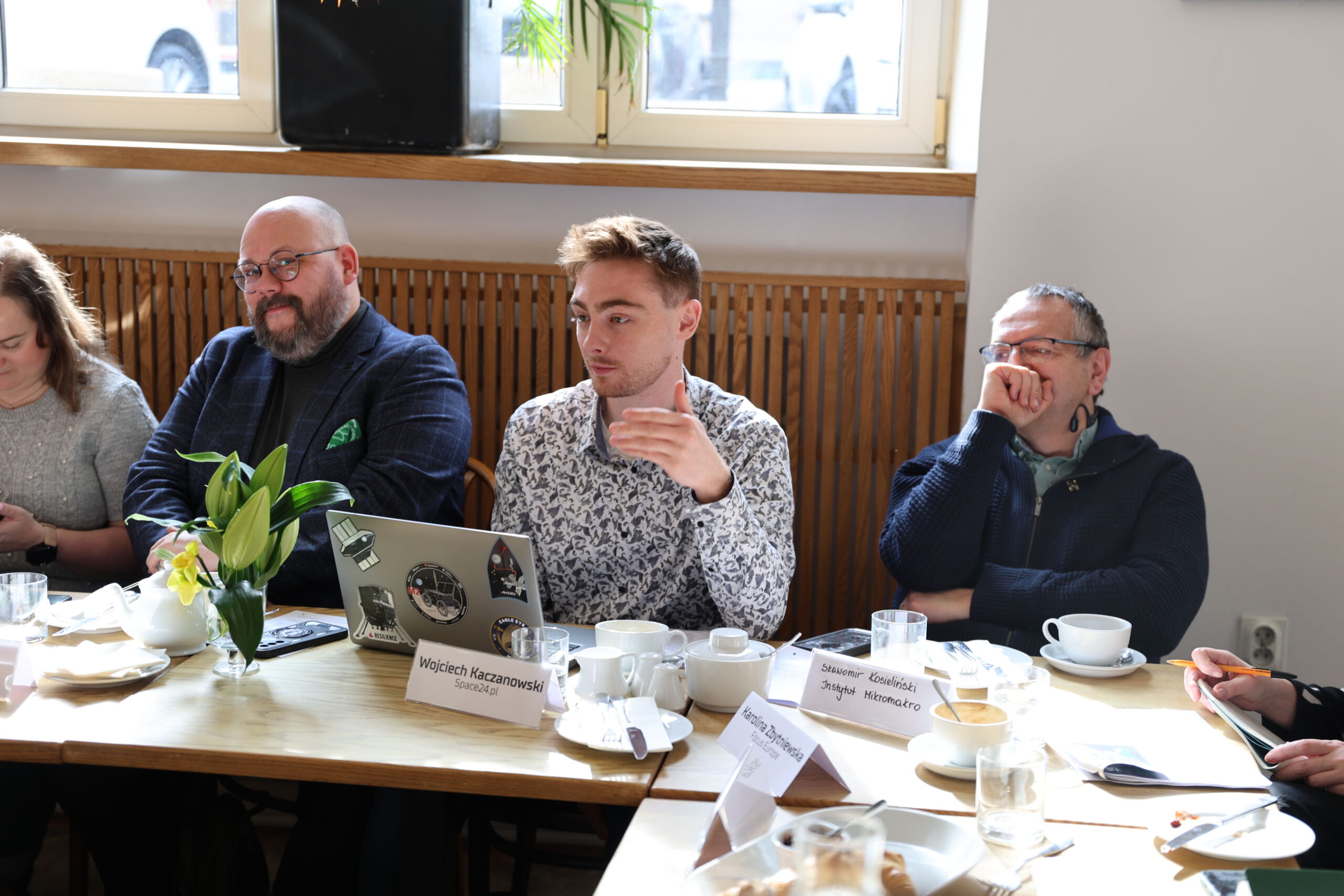
On Tuesday, March 31, 2026, an expert breakfast was held at the Czytelnik Café in Warsaw, dedicated to the most important technologies in the areas of unmanned systems and space technologies being developed within the framework of the Łukasiewicz Research Network. The meeting, organized by Łukasiewicz – ITECH, was attended by representatives of the institutes Łukasiewicz – PIAP, Łukasiewicz – WIT, Łukasiewicz – PIMOT, Łukasiewicz – ILOT, as well as experts from leading analytical institutions, the media and international organizations.
Unmanned and space technologies are becoming a cornerstone of Europe’s security. The EU’s “Defense Readiness 2030” plan identifies four strategic areas: European Drone Defense Initiative, Eastern Flank Surveillance, European Air Shield and European Space Shield. In as many as three of the four areas from these, the Lukasiewicz Research Network is providing original solutions and competencies. The recently announced Space Research Program of the Lukasiewicz Research Network, which will consist of dozens of research projects planned until 2035 with a total budget of about PLN 2.4 billion, was particularly widely reported. Technically, the program focuses on three areas: development of satellite platforms, launch technologies and work on so-called payloads.
While presenting the aforementioned projects of the Network in detail, we also wanted to hear the voice of commentators in the field of international and defense affairs, as well as answer any questions that arose. This was also the purpose of the more than two-hour expert breakfast devoted to space and unmanned technologies being developed at the Lukasiewicz Research Network. The event was attended by representatives of the institutes, as well as experts from leading analytical institutions, the media and international organizations.
The meeting was opened by Dr. Michal Matlak, Director of Łukasiewicz – ITECH, welcoming the participants and introducing the topic of the breakfast. Dr. Hubert Cichocki, President of the Łukasiewicz Research Network, then took the floor.
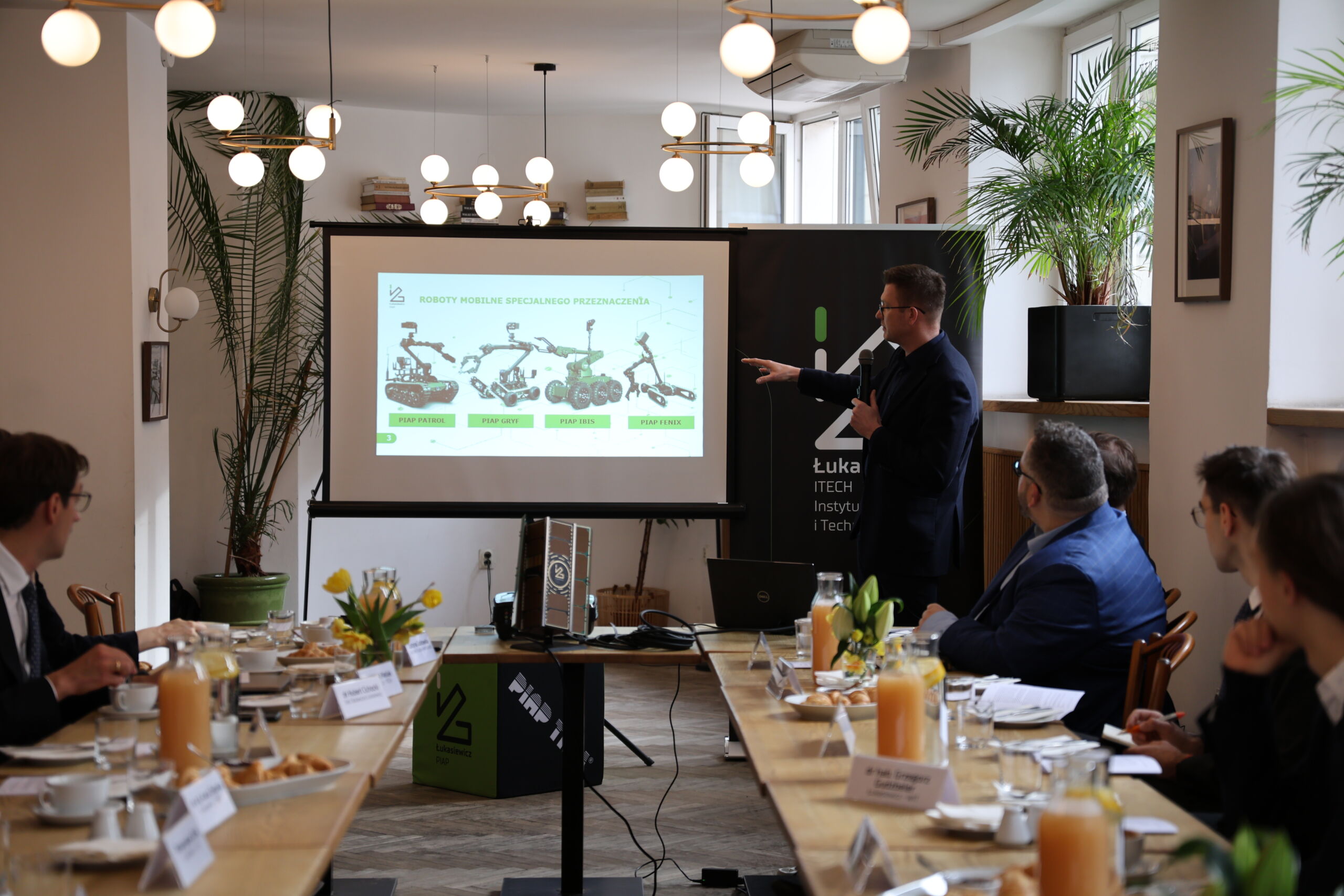
The centerpiece of the event were speeches by four Lukasiewicz institutes, which presented the unmanned and space technologies they are developing.
Lukasiewicz – PIAP presented the latest land robotics (UGV) solutions, designed in a dual use model – for the military and civilian services. The systems presented included PIAP HUNTeR (a modular platform tested in European army exercises, used from reconnaissance to combat operations support), as well as PIAP IBIS MULE (a pyrotechnic robot transformed into a transport and evacuation system) and TARANTULA (a lightweight reconnaissance robot responding to the challenges of modern conflicts).
Lukasiewicz – WIT develops advanced unmanned technologies used in border protection, critical infrastructure and environmental operations. Projects combine expertise in process automation, new materials and environmental technologies. A key direction of development is the transition from single devices to integrated autonomous systems, including networked, swarm and AI-supported solutions. One of the standout solutions was the hydrofoil – an autonomous water platform characterized by high speed, low energy consumption and high operational discretion. Thanks to its modular design, it finds applications in border monitoring, critical infrastructure, environmental operations and military missions.
Lukasiewicz – PIMOT presented technologies designed for automated and autonomous vehicles. These include software development, integration of sensors, actuators and research in simulation and test environments. The solutions are aimed at both the civilian and defense markets. Among the systems presented were: HUSARZ (a versatile unmanned platform with high mobility), PAWO (an autonomous operational support platform capable of operating in difficult terrain), and systems that automate manned vehicle tasks, including demining solutions (e.g., the SHIBA II project, implemented under the PERUN program).
Lukasiewicz – ILOT presented activities in the field of aerospace technology and presented the Lukasiewicz Network Space Research Program Lukasiewicz – Aerospace Institute engineers already have a place in the history of world space engineering. The ILR-33 BURSZTYN 2K suborbital rocket, the world’s first to use 98% hydrogen peroxide as an oxidizer, has been tested in its target configuration and reached a ceiling of 101 km (the conventional limit of space).
We would like to thank all the experts representing the institutes of the Lukasiewicz Research Network and the invited guests for their participation in the event and inspiring discussions.