How should the development of energy technologies be planned to strengthen Poland’s energy security and sovereignty?
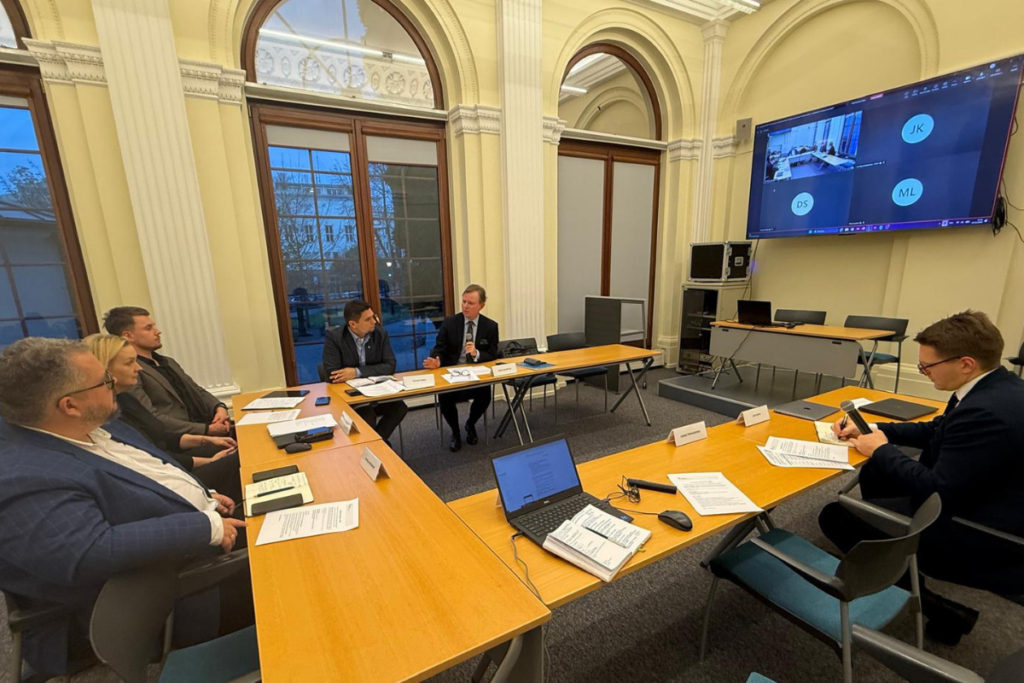
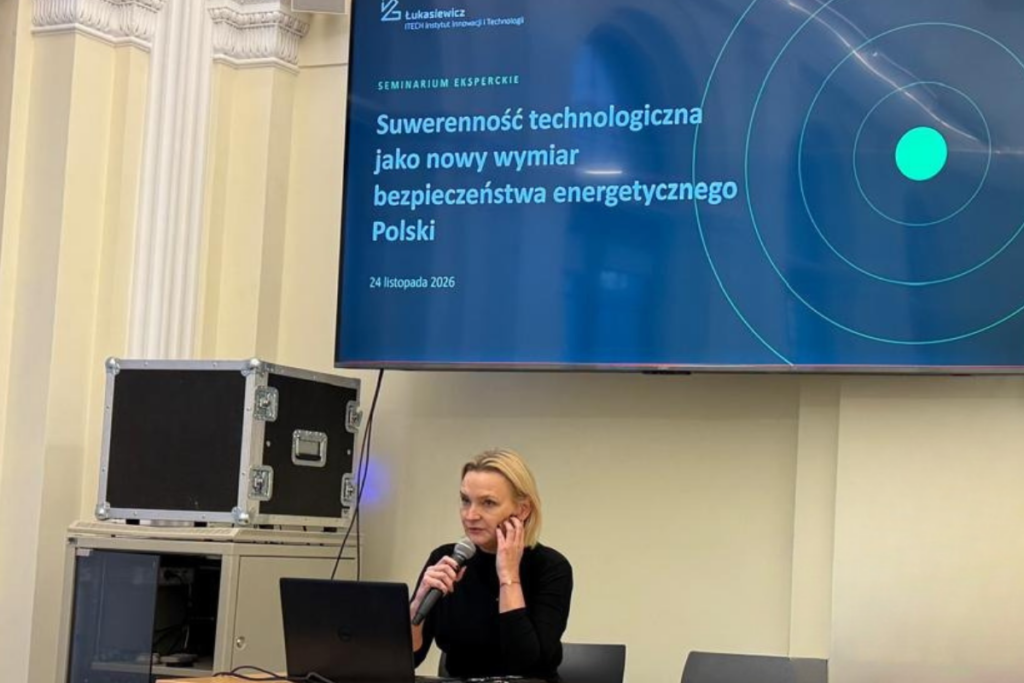
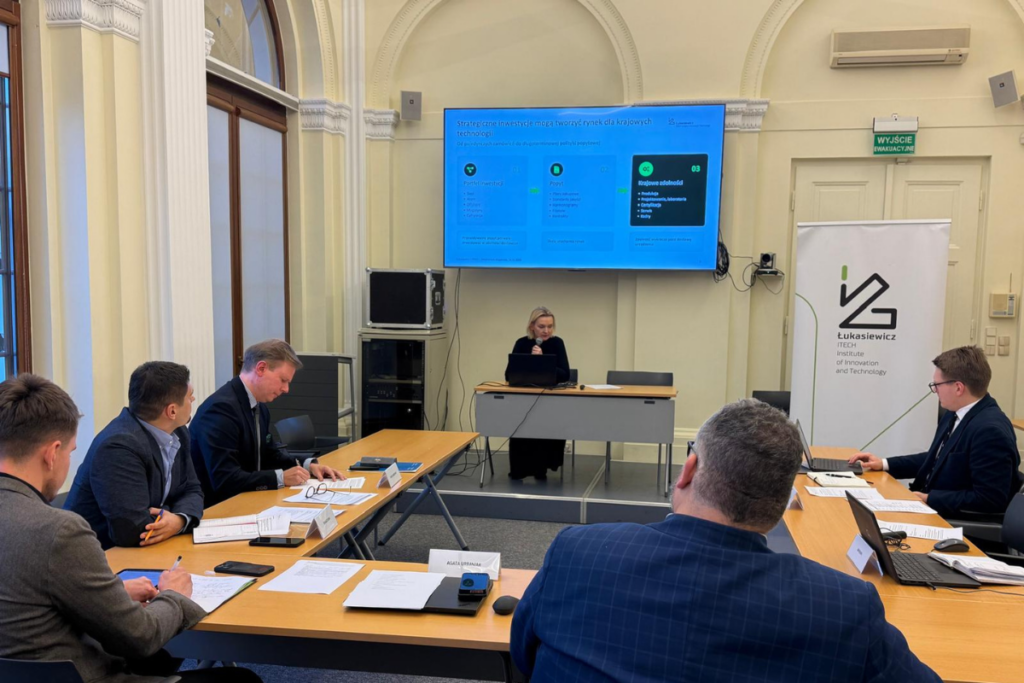
This question was at the heart of discussions during the expert seminar “Technological Sovereignty as a New Dimension of Poland’s Energy Security”, organised by the Łukasiewicz Research Network – ITECH Institute of Innovation and Technology on 24 November 2026 at the Staszic Palace in Warsaw. The event brought together representatives of government administration, research institutions, private organisations andthe Łukasiewicz Research Network, who participated both in person and online.
Participants emphasised that technological sovereignty does not mean self-sufficiency or relying exclusively on domestically developed solutions. Rather, it involves making informed and carefully considered choices: understanding existing dependencies, determining which of them are acceptable, and developing the capacity to replace vulnerable links in supply chains. Where the objective is to build domestic technological capabilities, coordinated and sustained government action is essential.
This process requires both strategic decisions by the relevant ministries and a strong commitment from energy companies. By building trust among smaller business partners and providing them with a predictable operating environment, these companies can help develop domestic technological capabilities across different segments of the energy sector through long-term, capital-intensive projects. In light of these findings, a proposal has been put forward to establish a single administrative body with sufficient authority to oversee strategic technology choices, either in the form of a government plenipotentiary or a council operating under the Prime Minister.
Such a body would provide both the necessary legitimacy and coordination for strategic technology choices, bringing energy, industrial, raw materials, research and skills development policies together into a coherent framework. Considerable attention was also devoted to the state’s capacity to deliver megaprojects. Projects of this scale frequently exceed their initial budgets and timelines, while their implementation extends well beyond the four-year electoral cycle. Their success therefore depends on a lasting, cross-party consensus.
It was also noted that renewable energy installations have significantly shorter operational lifespans than nuclear power facilities, resulting in different patterns of investment expenditure and risk over time. Participants further highlighted that dependence on foreign equipment suppliers could deepen over time as the expansion of generation capacity on a much larger scale leads to growing maintenance and servicing requirements.
Security and resilience were also central themes of the debate. Discussions focused on the need to establish an appropriately decentralised crisis response system covering essential public services, with response mechanisms tailored to the specific requirements of services designated as critical. Poland’s electricity system has demonstrated considerable resilience. During a major disruption in 2021, approximately 10% of the country’s power generation capacity went offline, yet the incident did not result in a widespread blackout.
The situation was different in Spain, as demonstrated by the widespread blackout in 2025. The discussion subsequently highlighted the importance of protecting critical infrastructure, including against drone attacks, and making effective use of the time currently available to strengthen preparedness at both the collective and individual levels.
As participants in the discussion pointed out, Poland’s engineering and technical workforce is one of the country’s key strengths. However, developing these skills and capabilities is a long-term process that requires carefully designed career pathways for young professionals, coherent certification frameworks, and close cooperation between universities and industry.
The Łukasiewicz – ITECH seminar series brings together policymakers, experts and representatives from various sectors. Its aim is to provide a forum for in-depth discussions on the key challenges facing Poland, facilitate the exchange of perspectives, and identify barriers to the effective design and implementation of strategic solutions.