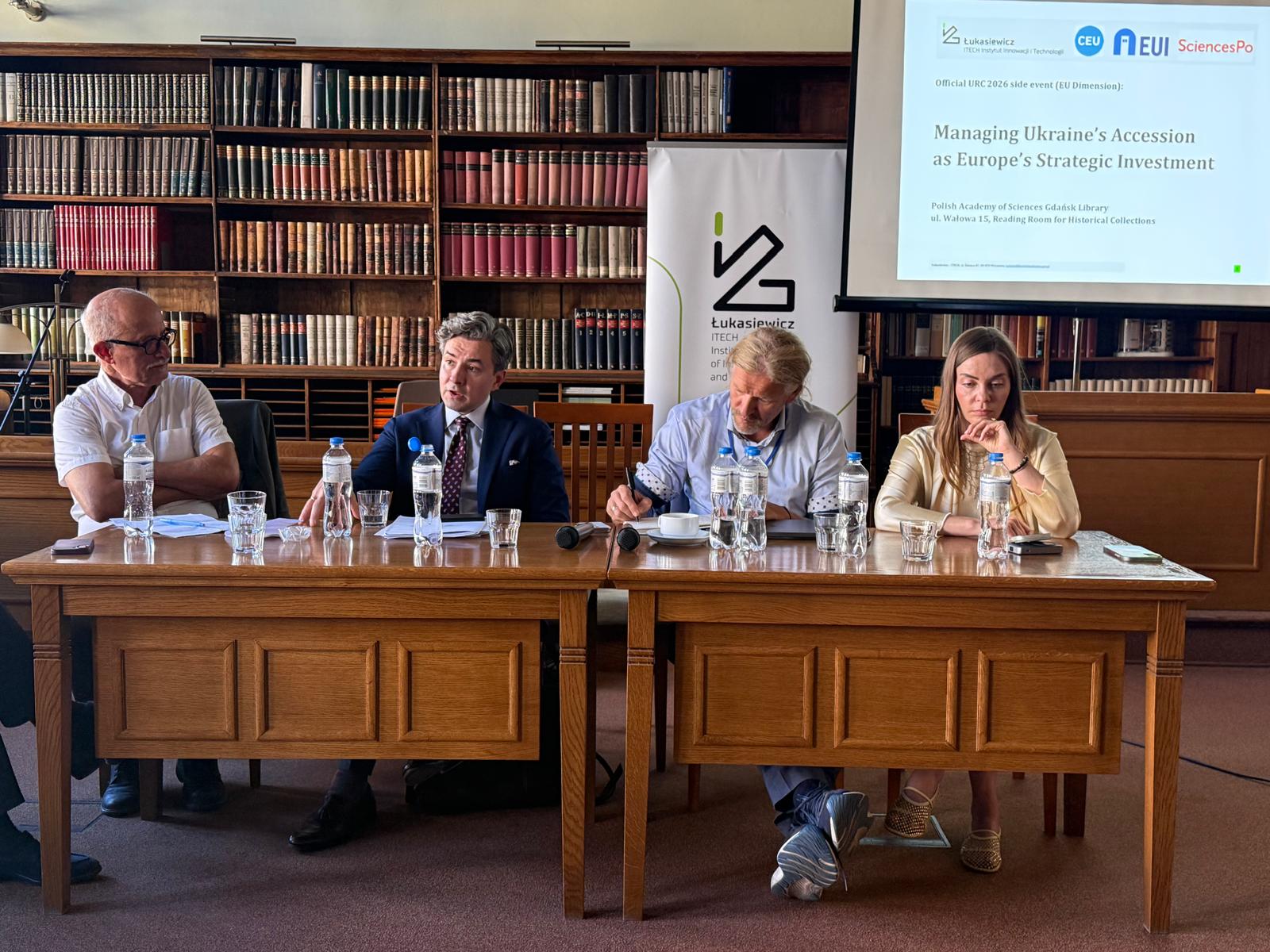
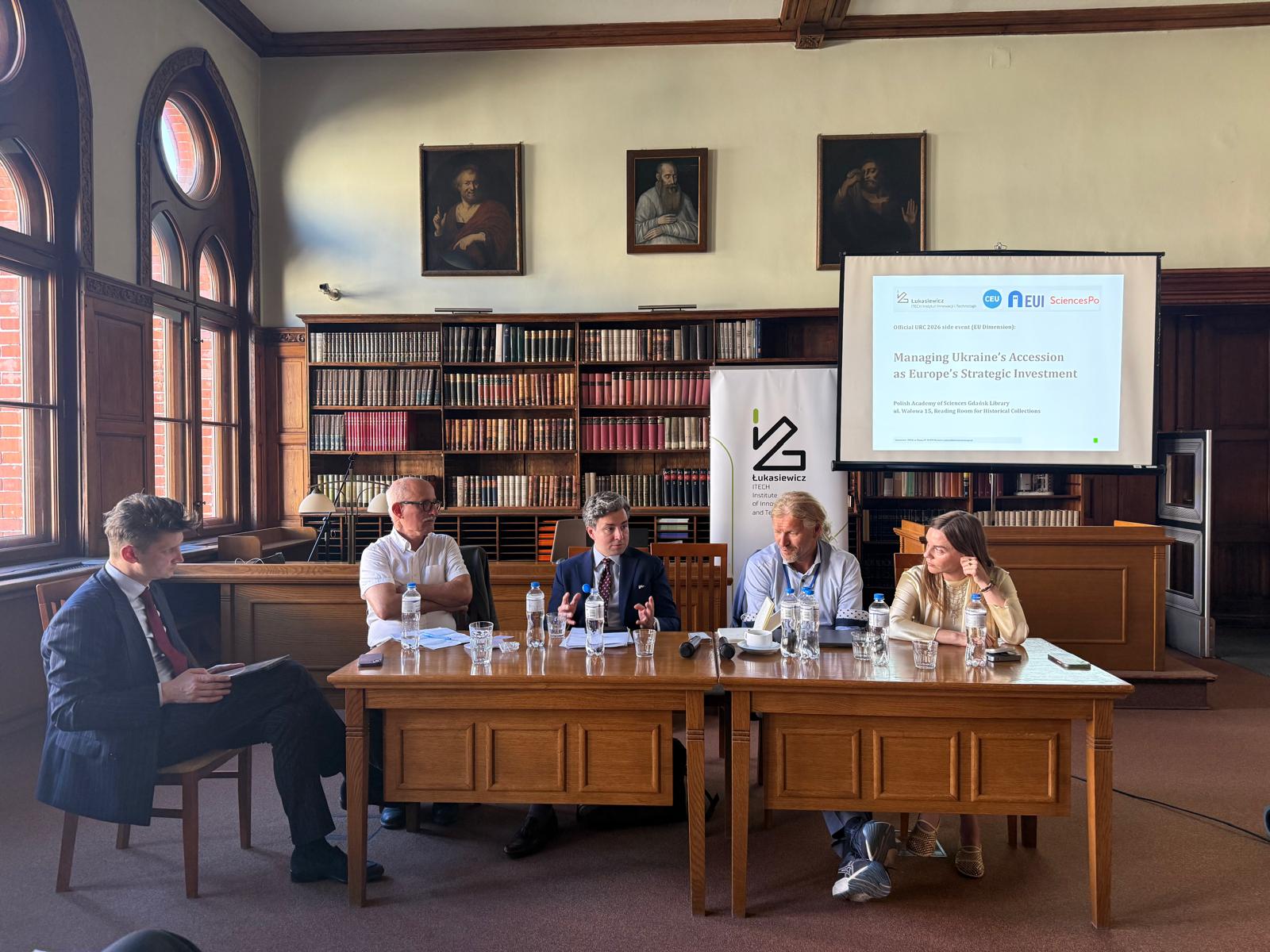
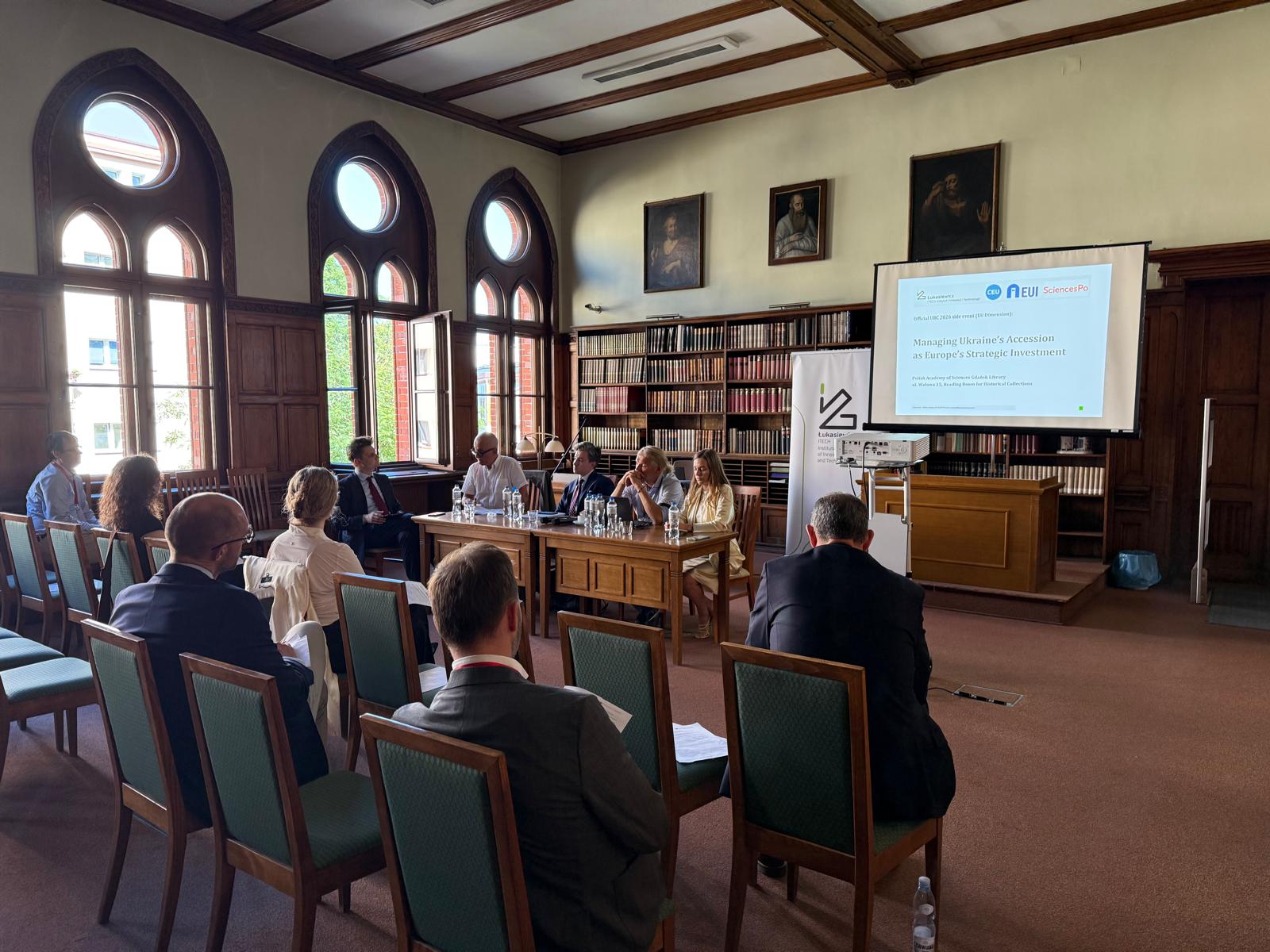
This topic, as well as the current progress of the accession negotiations, was discussed on June 24 during a debate organized by Łukasiewicz - ITECH as an official side event of the Ukraine Recovery Conference held in Gdańsk.
The following individuals participated in the panel titled “Managing Ukraine’s Accession as Europe’s Strategic Investment” :
- Olena Sotnyk, strategic advisor to Taras Kachka, Ukraine’s Deputy Prime Minister for European and Euro-Atlantic Integration
- Aleksander Siemaszko, Director of the Department of Trade and International Cooperation, Ministry of Development and Technology
- Tinatin Akhvlediani, Head of the Enlargement Program, CEPS
- Prof. László Bruszt, CEU Democracy Institute, Budapest
- Prof. Matthias Thiemann, Full Professor of EU Public Policy, Sciences Po, Paris
The discussion was moderated by Dr. Michał Matlak, Director of Łukasiewicz – ITECH.
During the debate, the current enlargement methodology was analyzed—including the pace and sequencing of preparations for individual negotiation chapters—by comparing its assumptions with the political dynamics on both the EU and Ukrainian sides.
The panelists discussed how effective a philosophy of conditionality might be when applied to a country waging an existential defensive war, in which the European Union is its ally and—according to current statistics—the largest provider of support. In this context, traditional reform requirements clash with the realities of martial law and limited administrative capacity.
Director Aleksander Siemaszko discussed the practical implications of the DCFTA (Deep and Comprehensive Free Trade Agreement) in EU–Ukraine relations, identifying it as a starting point and a test for deeper economic integration, as well as an instrument that is already shaping regulatory convergence today.